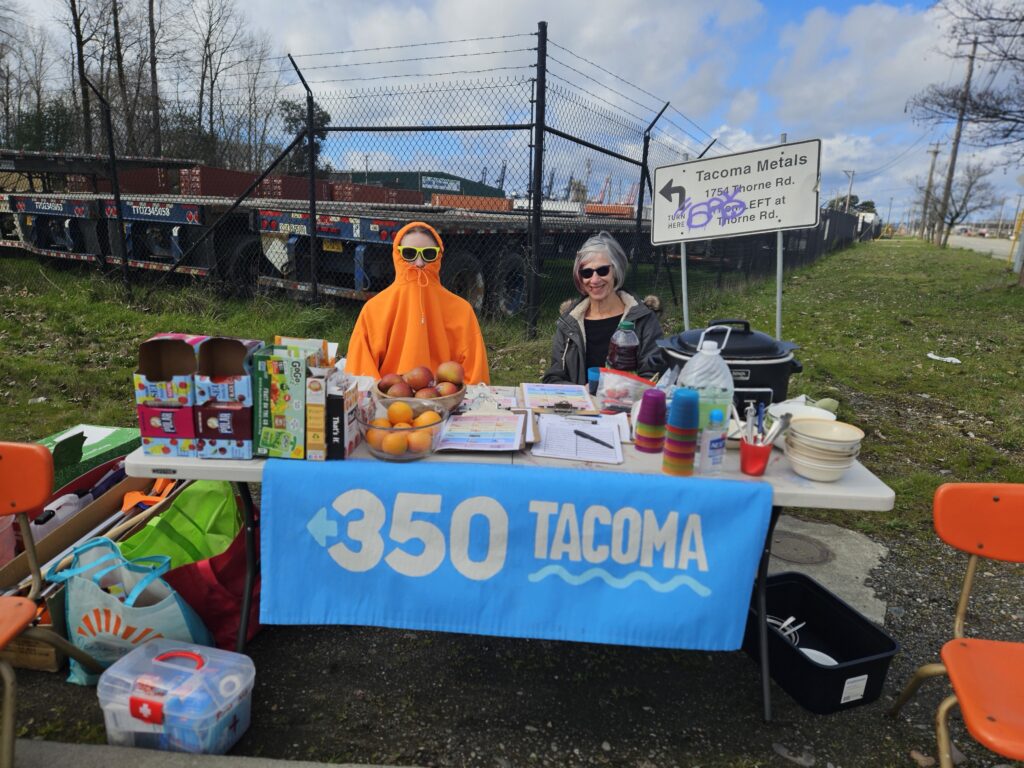
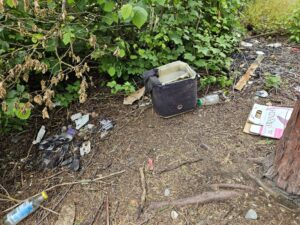
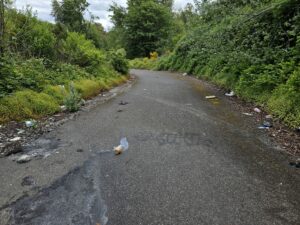
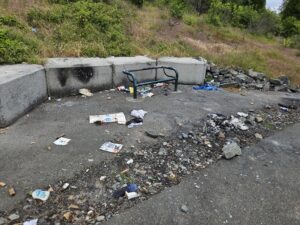
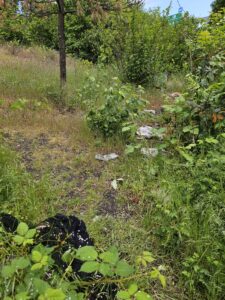
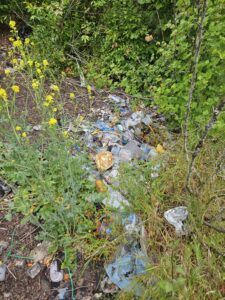
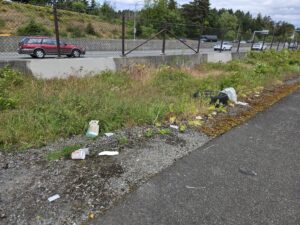
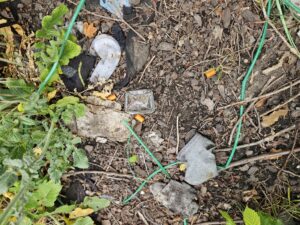
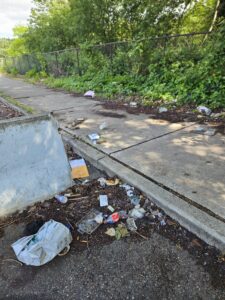
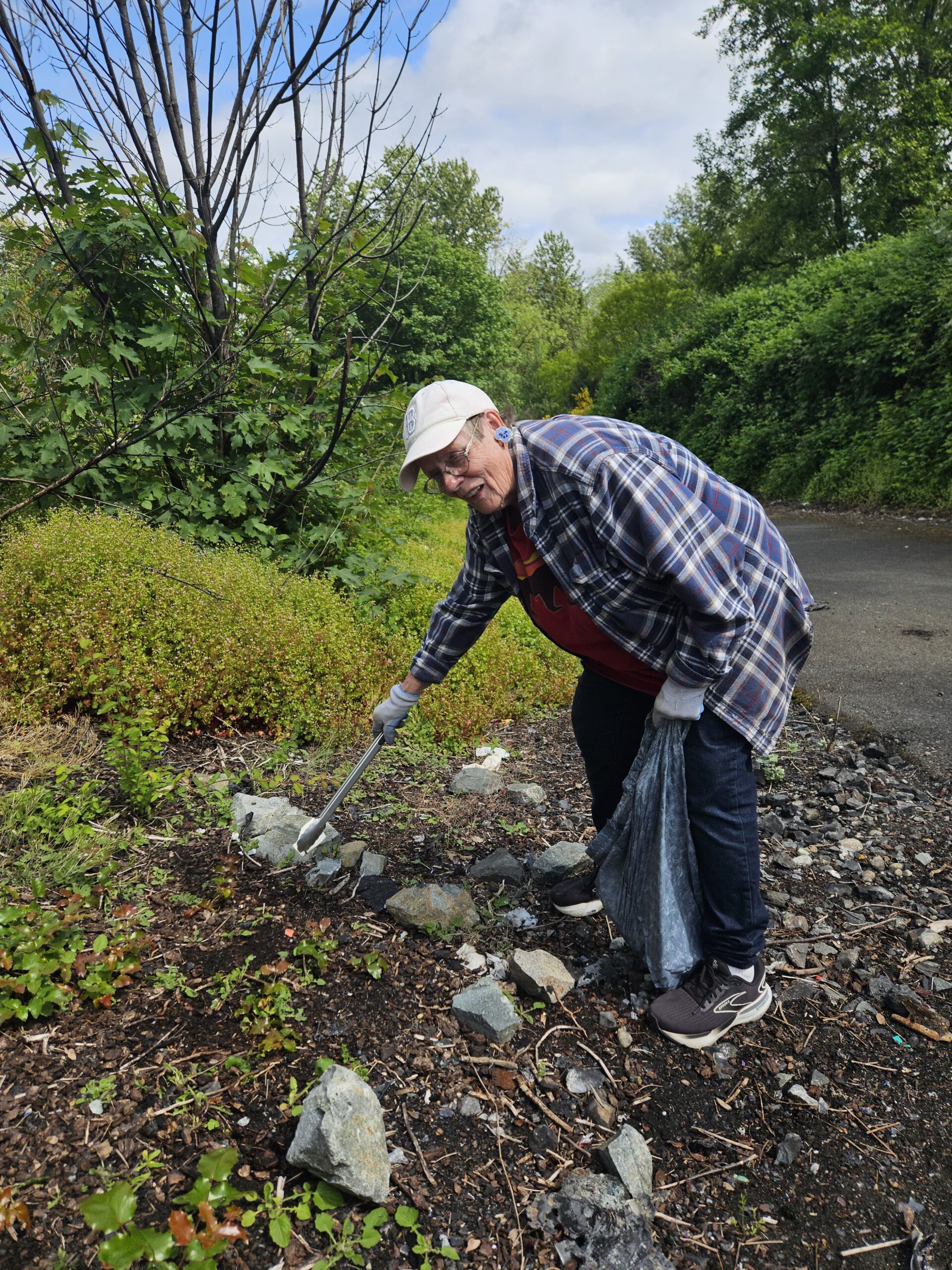
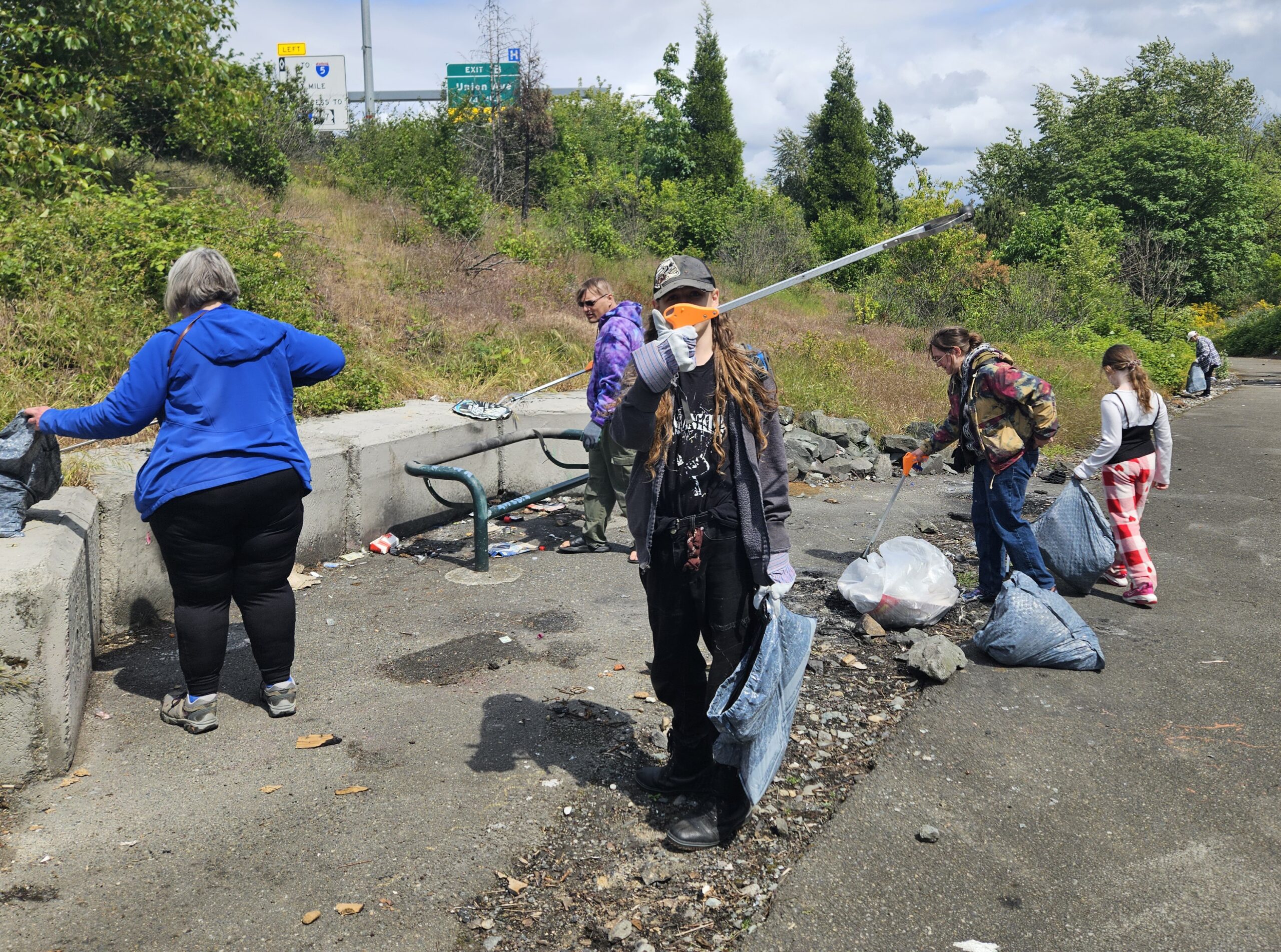
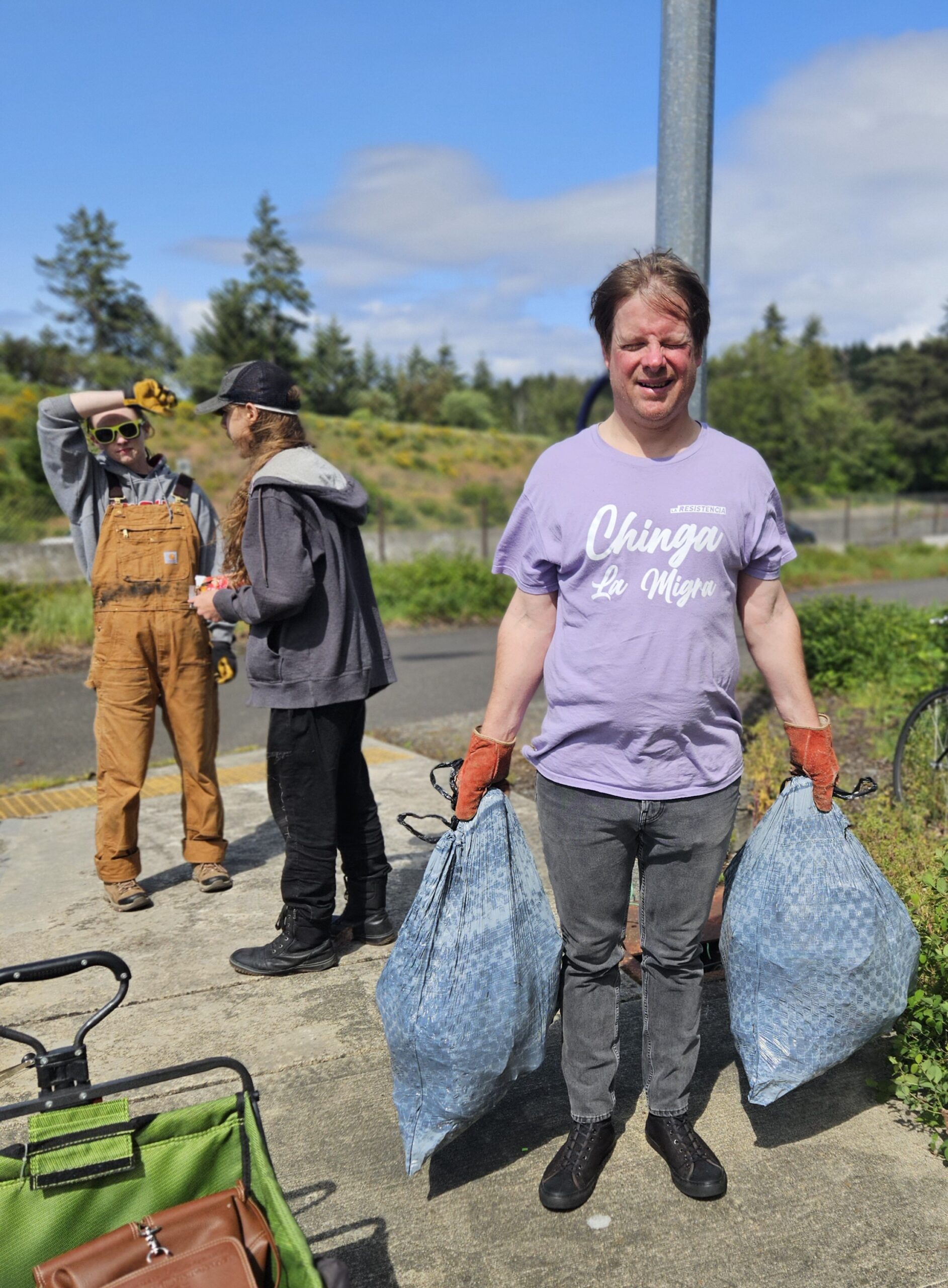
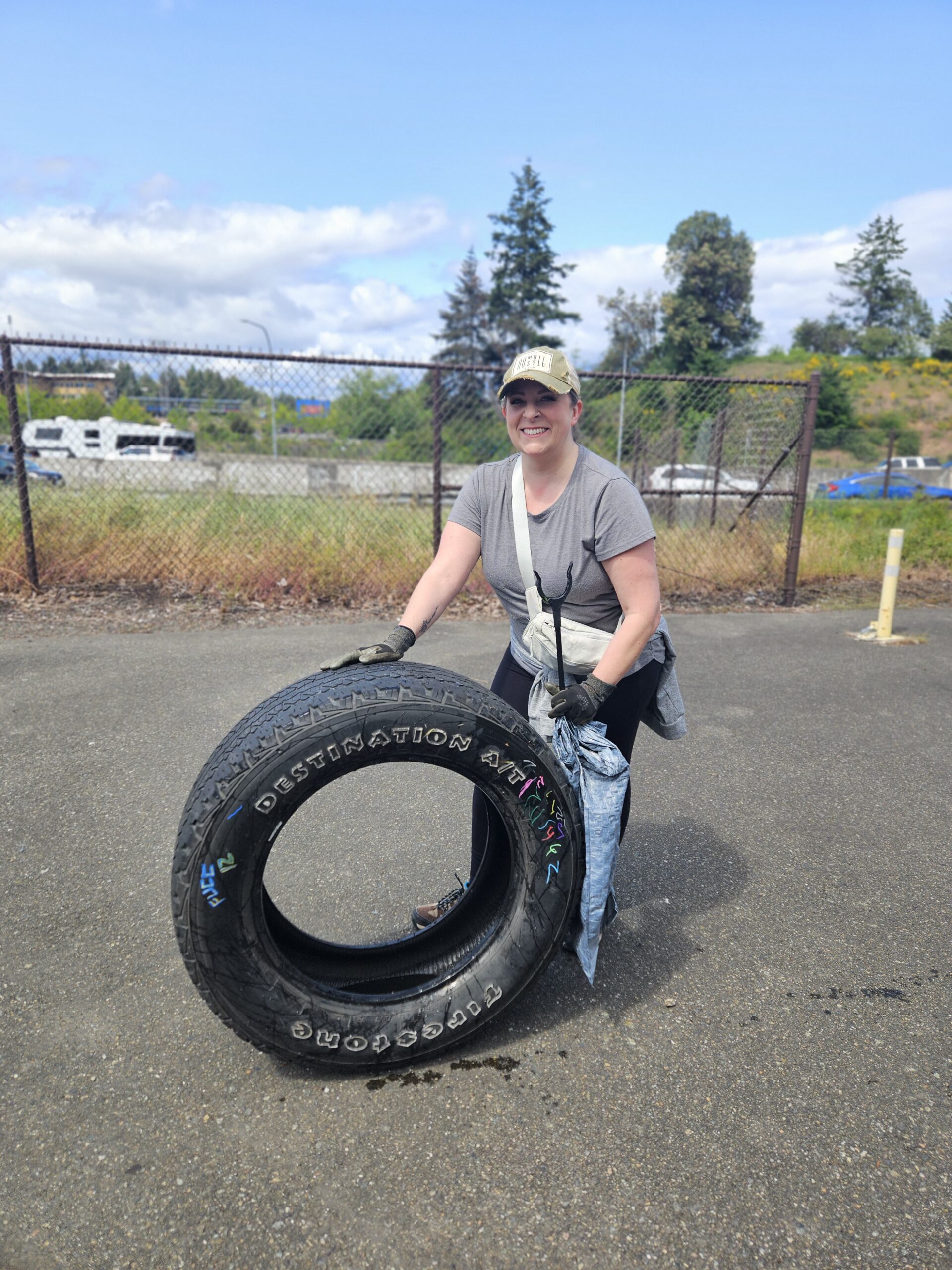
We are continuing our Clean Up Tacoma program this year, with monthly events planned for March – September. When choosing locations we focus on giving care to underserviced areas and places where trash might enter our waterways. If you have a location to recommend or questions about how to get involved send a message to 350tacoma@gmail.com. You can also check out a calendar of all our events (and some hosted by groups we collaborate with). We are utilizing the city’s Tidy Up Tacoma program to receive the support of free trash bags and our piles being picked up after events are completed.
Upcoming Events:
September 26th Swan Creek Park Trailheads Continued!
Help keep our neighborhoods, parks, & waterways clean! We’ll be working on several trailheads into Swan Creek Park that are close together.
Sat 9/26 from 1pm – 3pm, gather at 2080 E 56th St, Tacoma
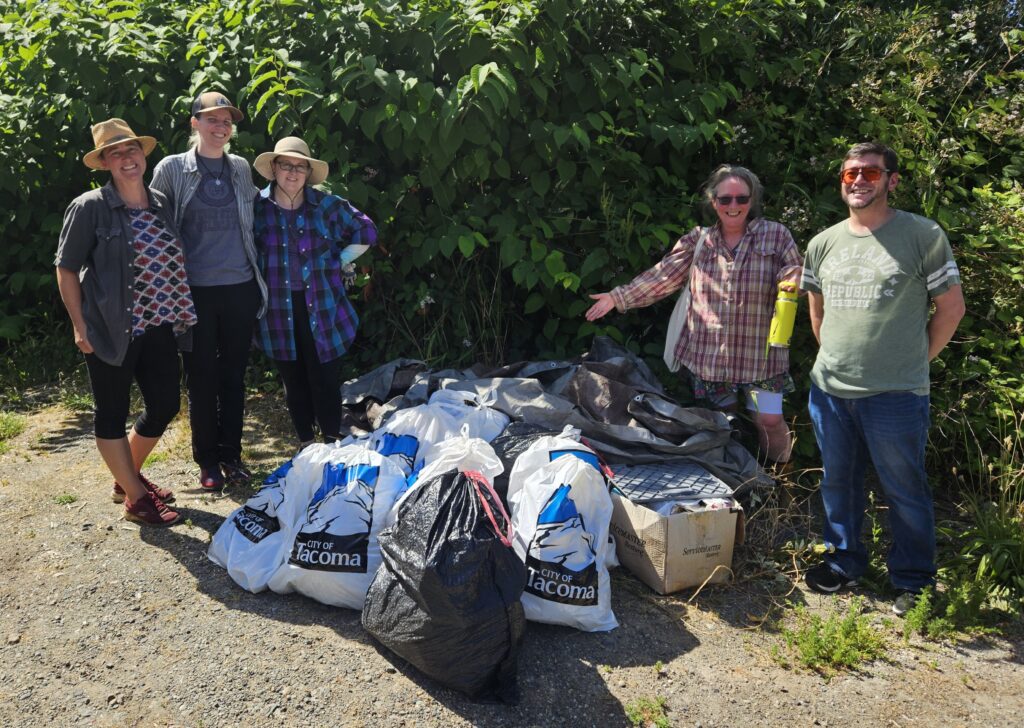
There is a lot of trash at this location so the more folks who show up, the better we can leave this wonderful place for residents to enjoy. Last month we filled up 9 large garbage bags during the two hour clean up, but this location could still use some love & care.
Gloves, tools, & snacks provided. All ages & abilities welcome.
Stewardship is an important way to connect with the world around us, and give care to Mother Earth who is caring for us. If you have a location to recommend for a future clean up send an email to 350tacoma@gmail.com
2026 Event Recaps
August - Swan Creek Park Trail Heads on Sat 8/15
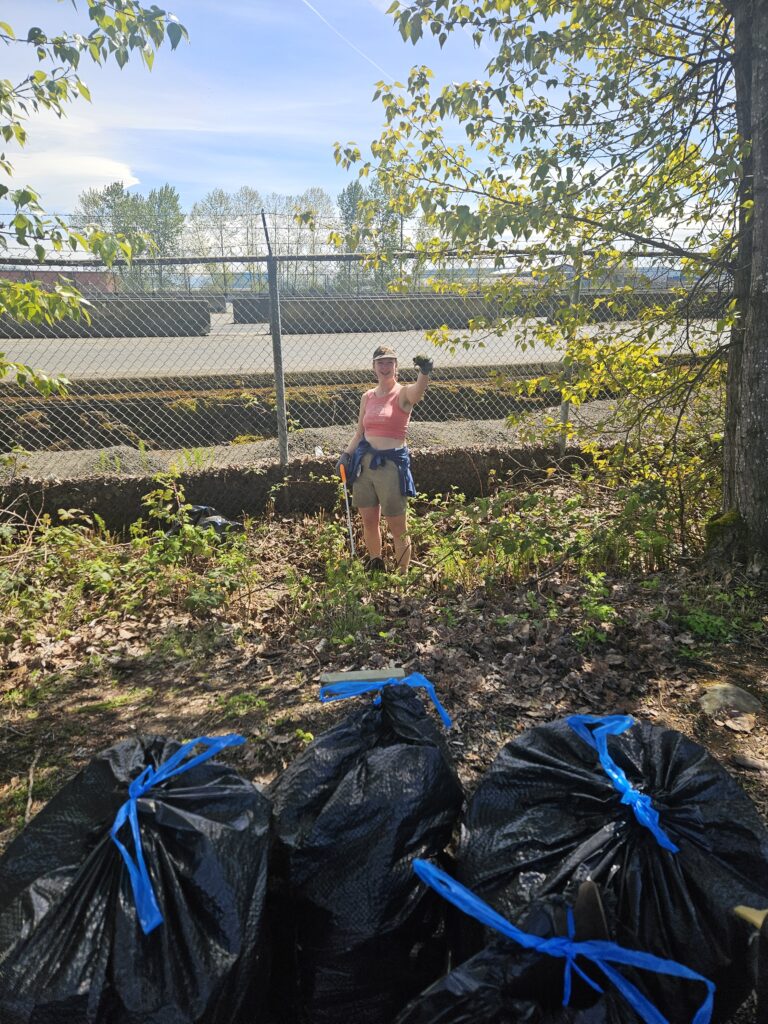
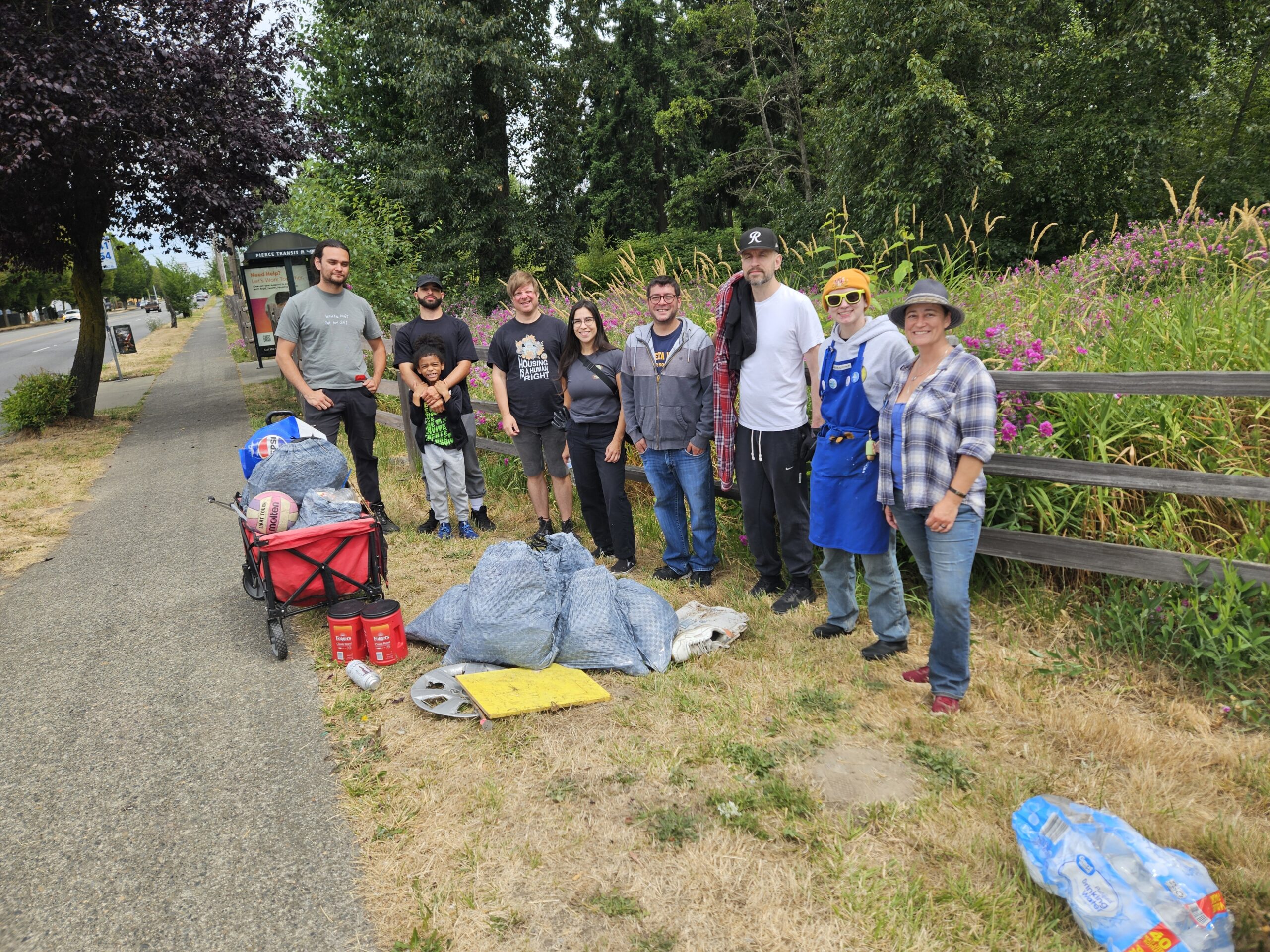
Thank you to all the amazing volunteers who came out to help clean up the trailheads of Swan Creek Park & the sidewalk on E 56th St!
We picked up about 10 big bags of trash during the two hour event, but there was so much more at this location. So next month we’ll be back to keep working on the trailhead entrances.
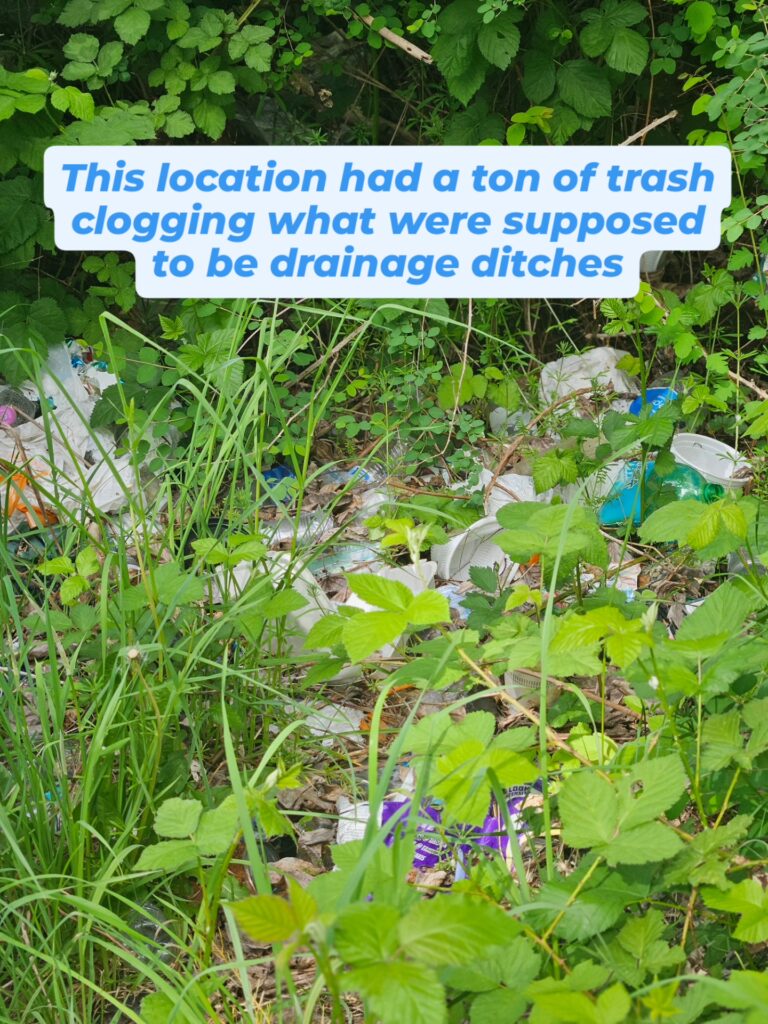
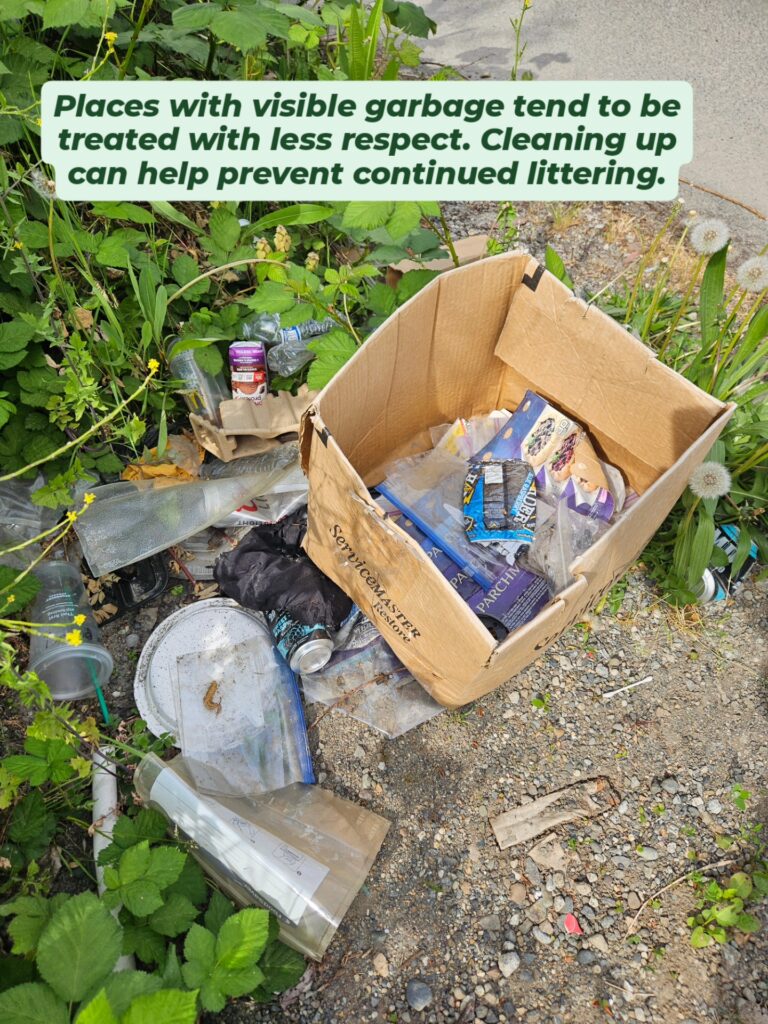
Much of the trash on this street and at the trailheads is bottles, cans, food wrappers, and plastic utensils. With so many trail entrances, apartments, and mini marts down the street, having more garbage cans in this area would likely reduce the amount of litter left on the ground.
July - Thompson Ave in South Tacoma
This month we cleaned up trash along a residential street in South Tacoma. We chose this location so that we also have volunteers help a disabled community member with their yard. We got the grass mowed, removed dead tree branches, cleared the yard that was encroaching on the sidewalk, and helped organize items in the carport. This is what commUNITY looks like. We have to take care of each other. (We did not take photos of the yard clean up to protect their privacy.) While this location may not have resulted in as many filled garbage bags as other Clean Up Tacoma events, our hearts were full.
June - Vacant Lot with Creek Access on East T Street
June was extremely hot and we had to fight blackberry bushes to get to large piles of trash, but didn’t let that stop us from collecting a huge pile of garbage in less than two hours!
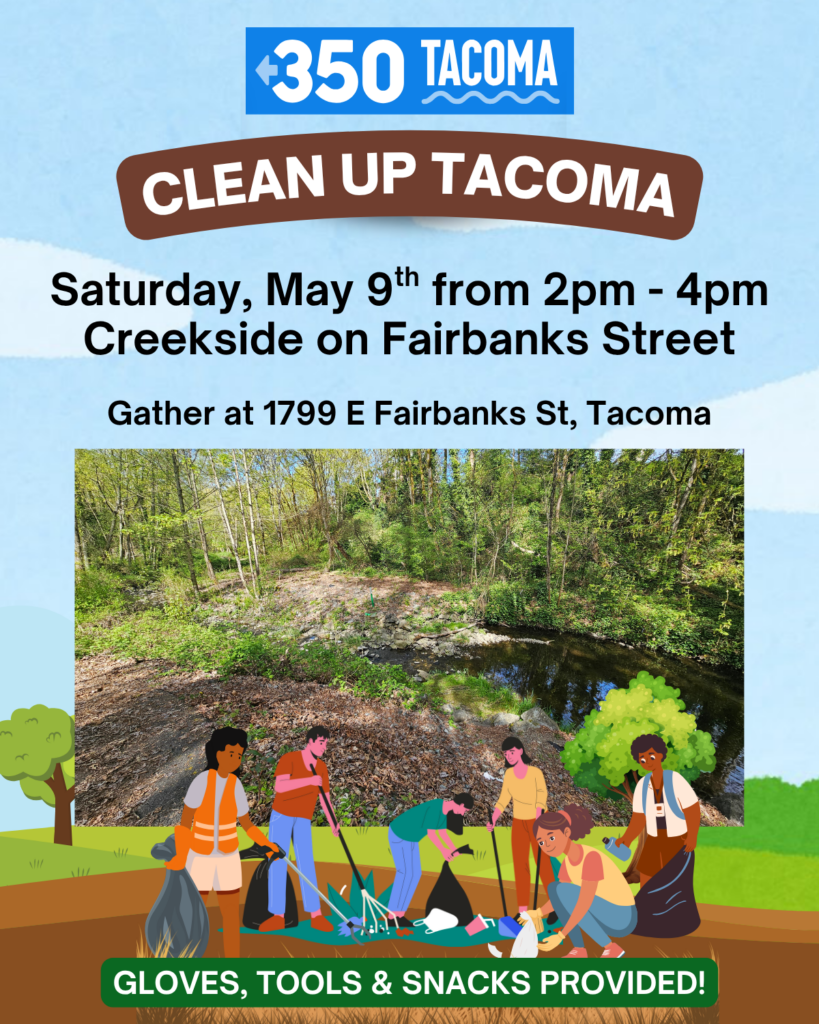
May - Creekside on Fairbanks Street
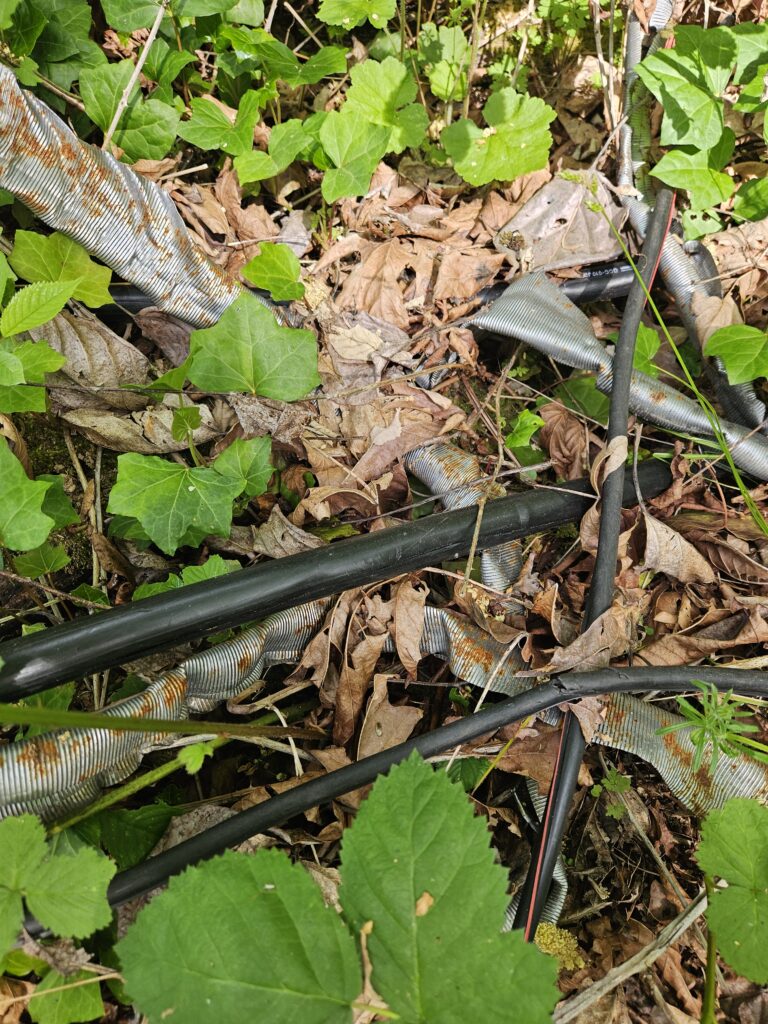
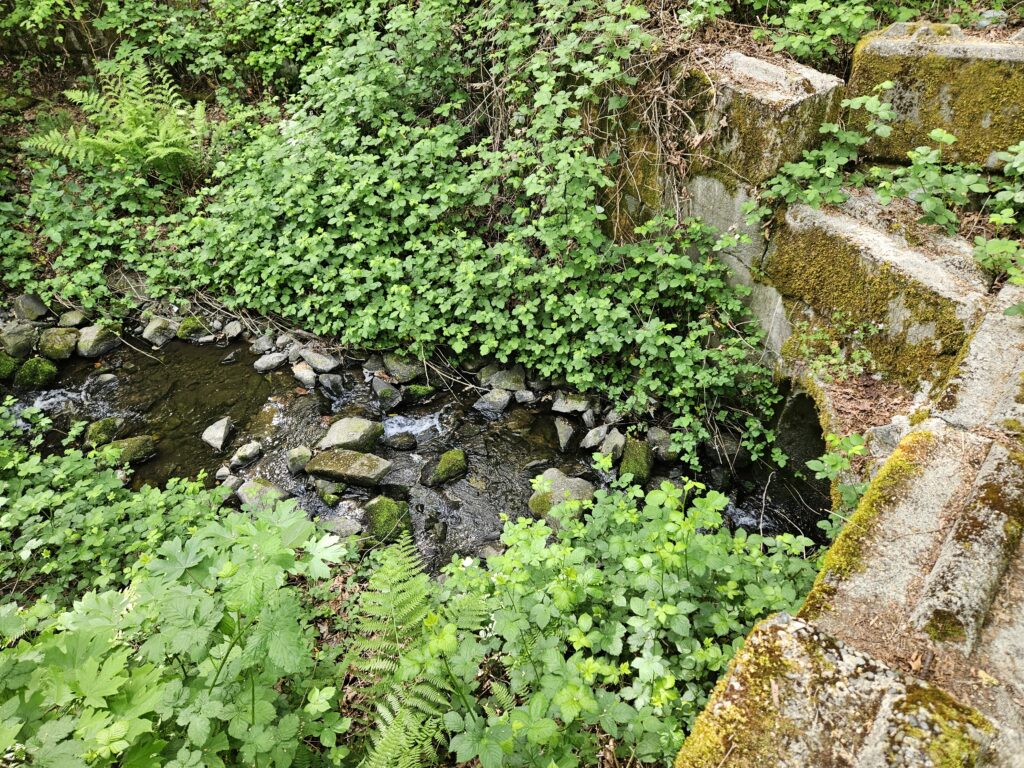
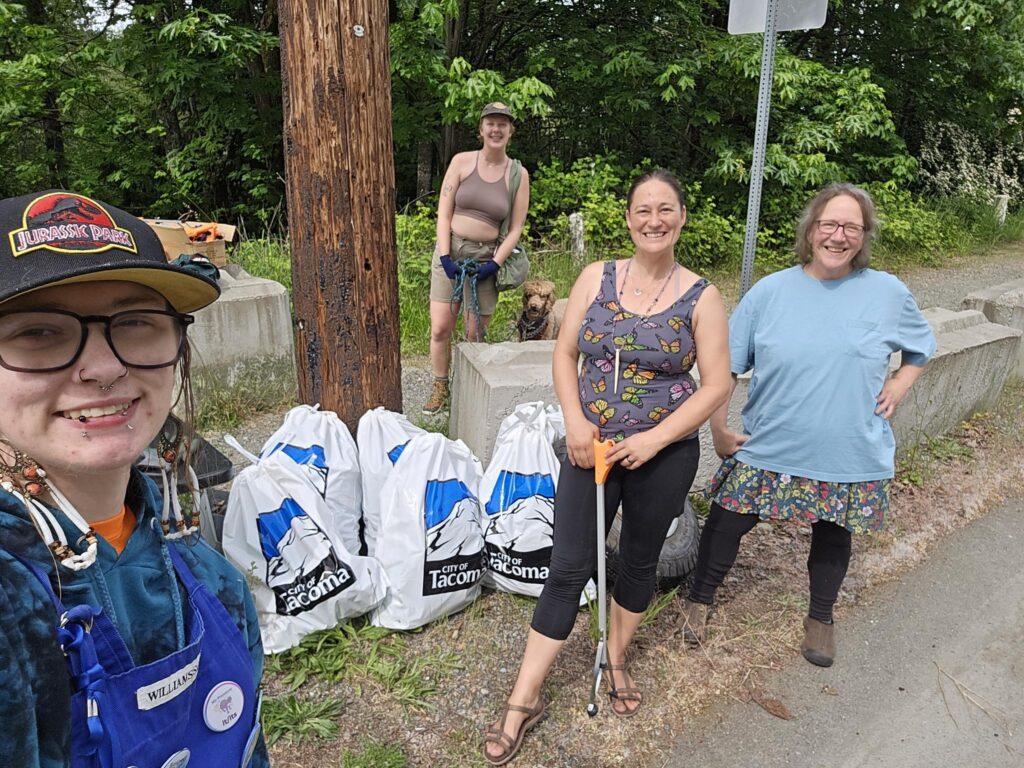
In May we cleaned up trash along a creek side, accessed via a path on Fairbanks Street. We were able to pick up a lot of bottles, cans, clothing, and food wrappers filling six bags, and some tires, which might have otherwise ended up in our waterways.
April - Maxwell Way Continued
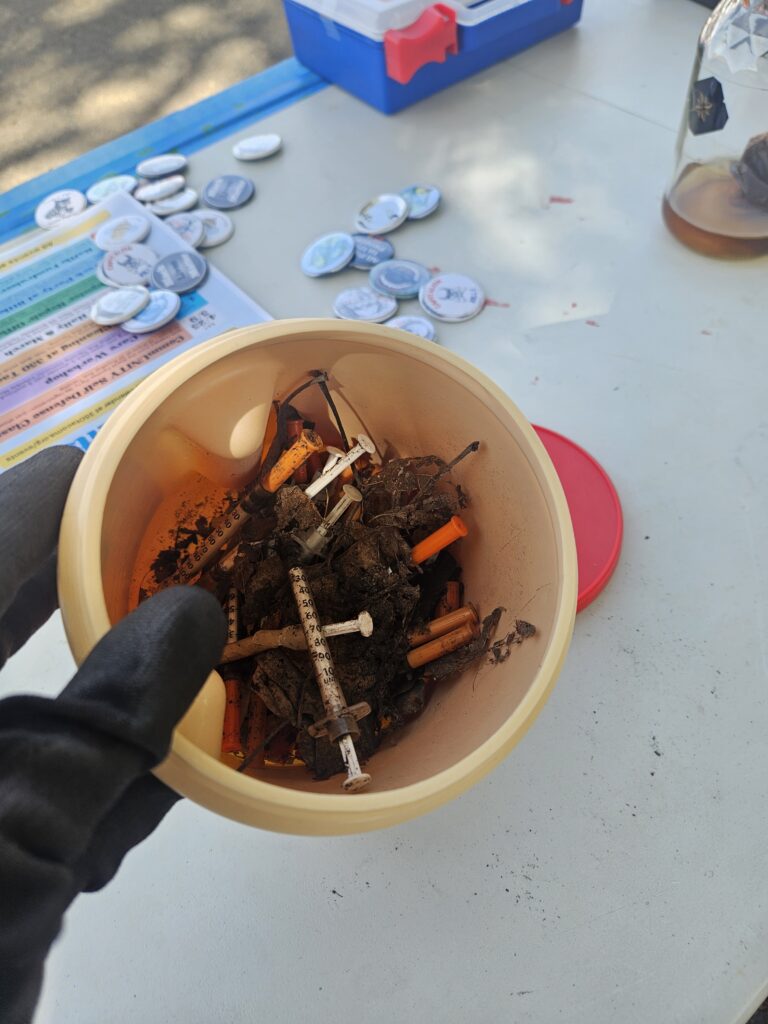
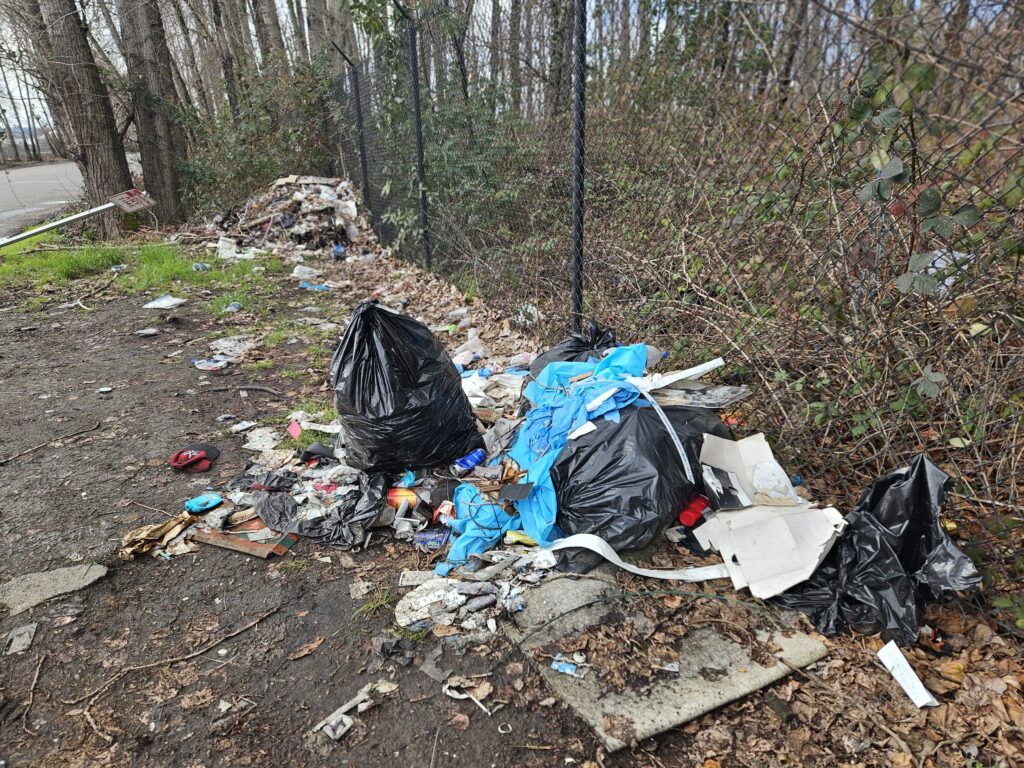
Our small but mighty crew continued the clean up started last month along a stretch of Maxwell Way. This time we found a lot of needles and items that looked dumped there.
March - Maxwell Way near little marsh
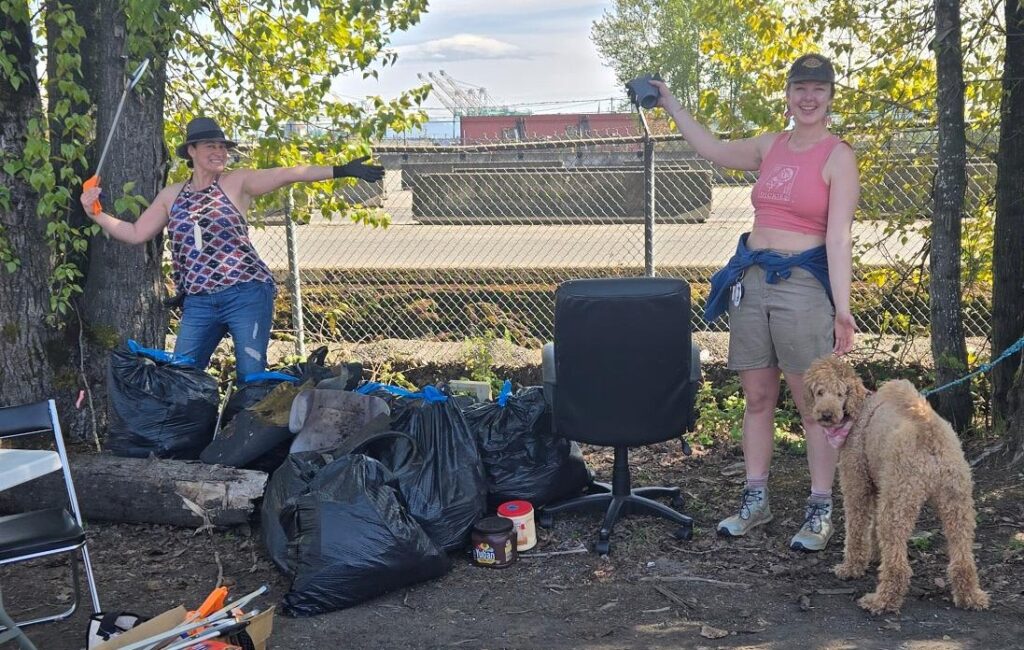
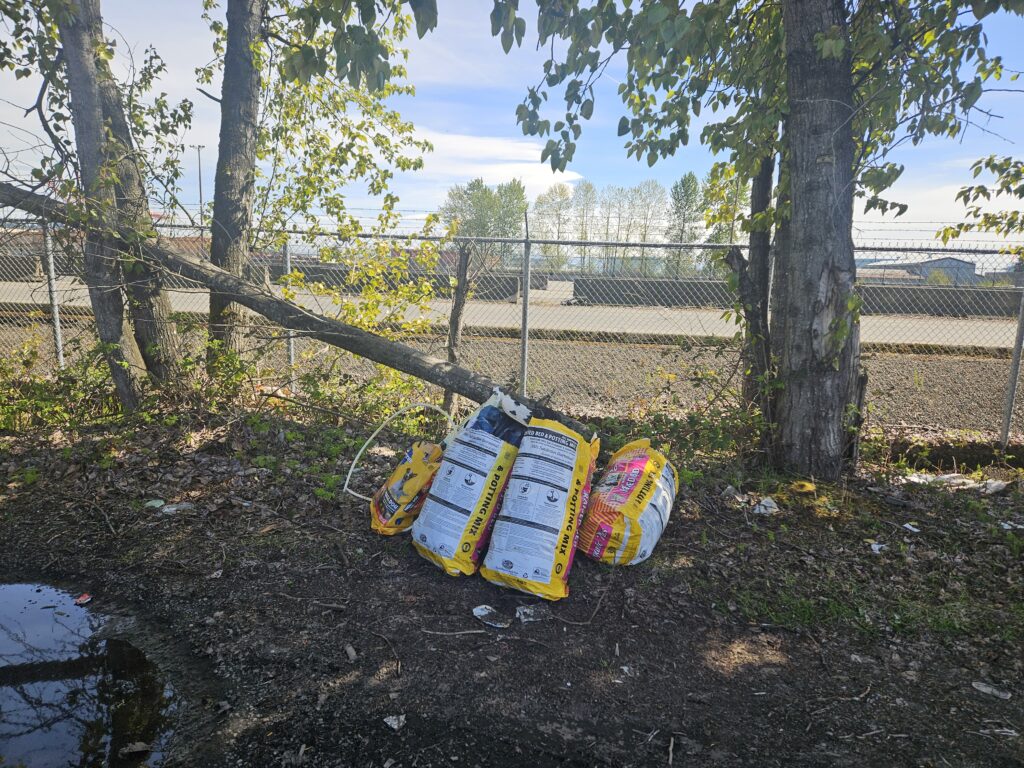
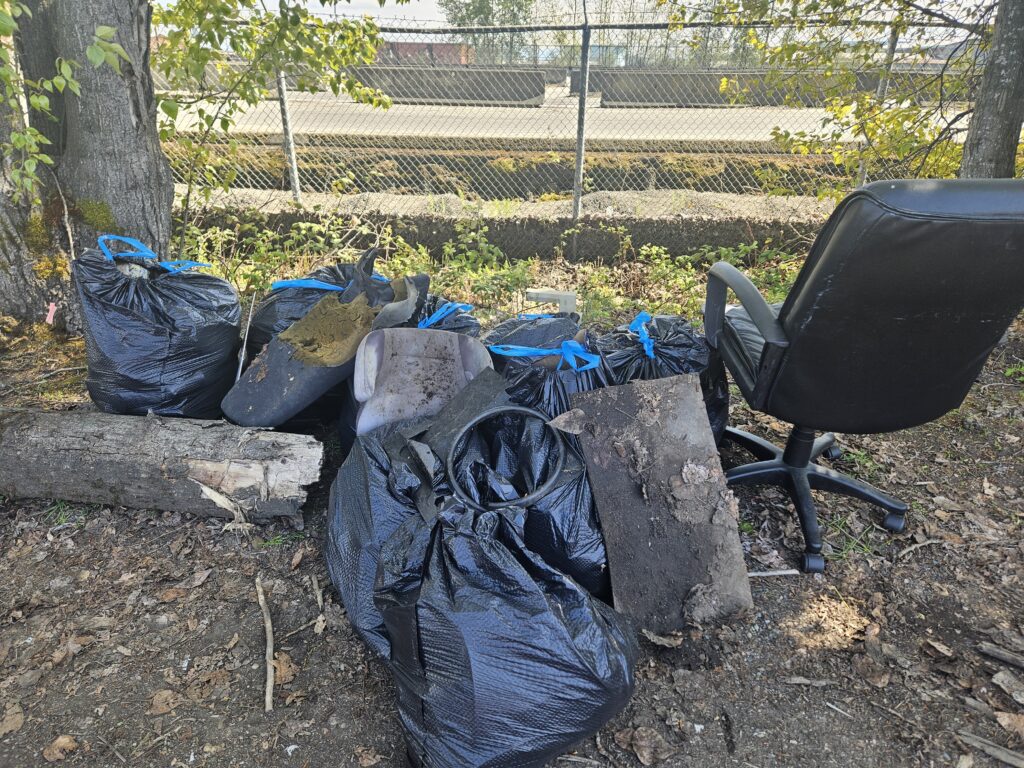
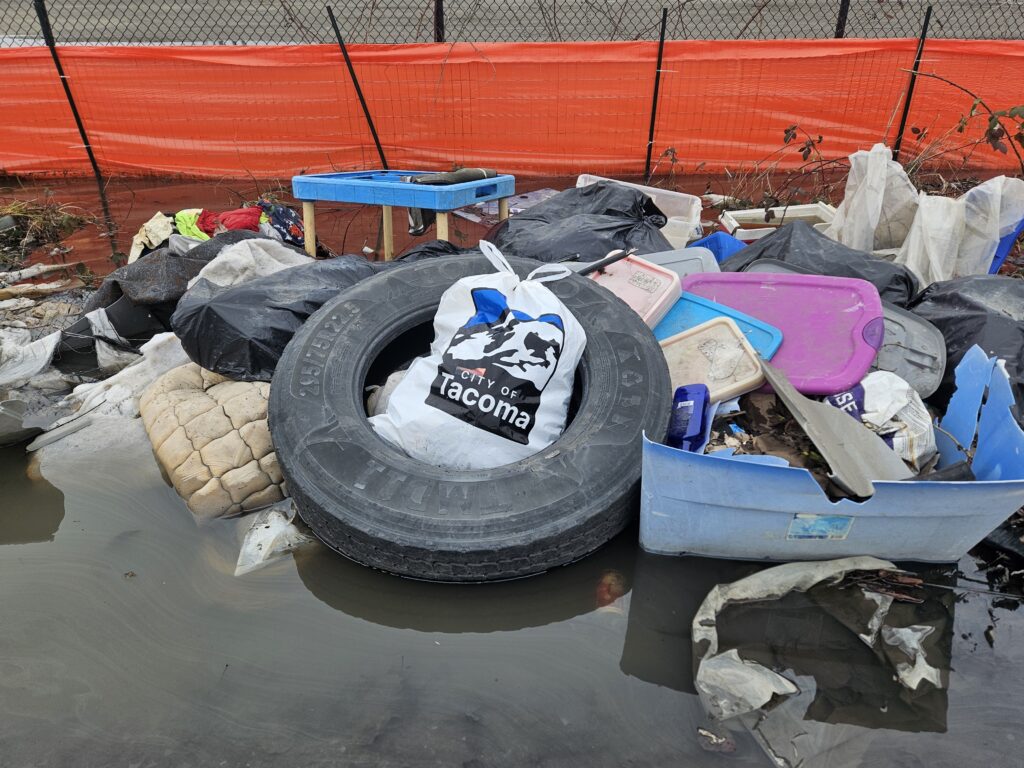
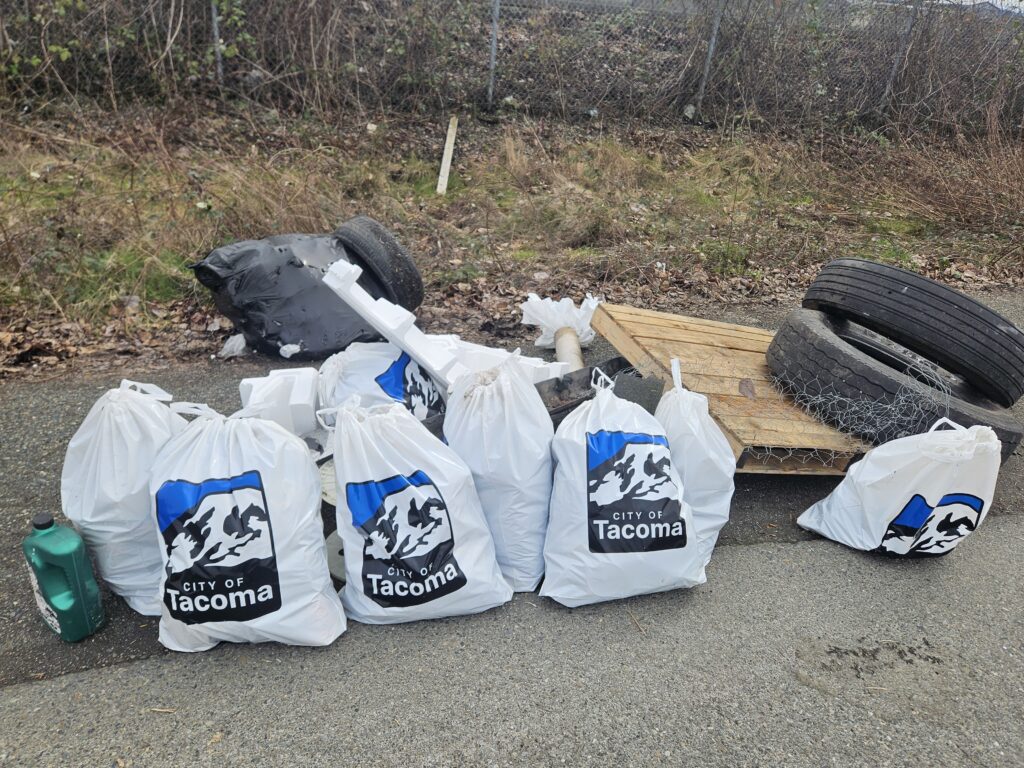
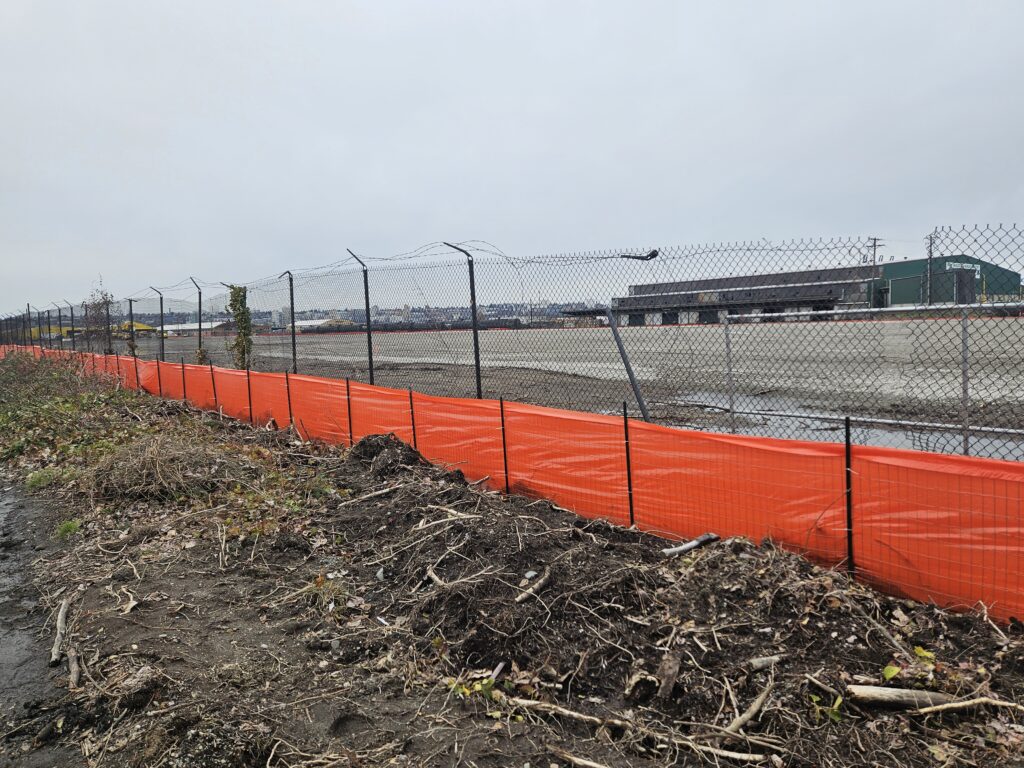
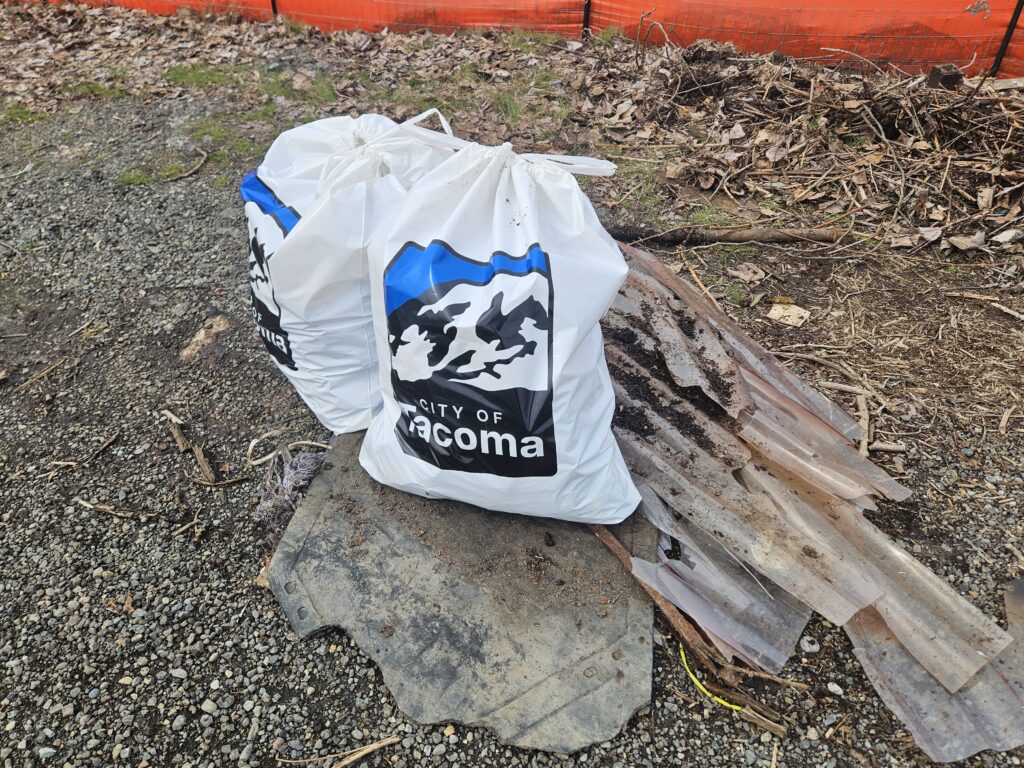
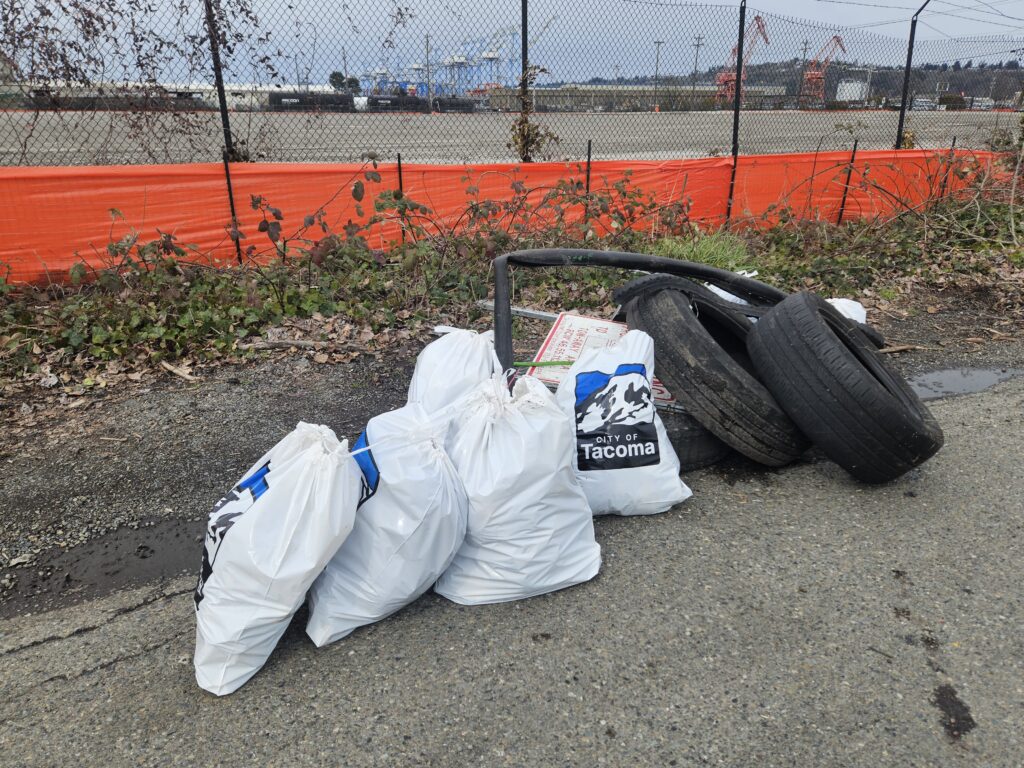
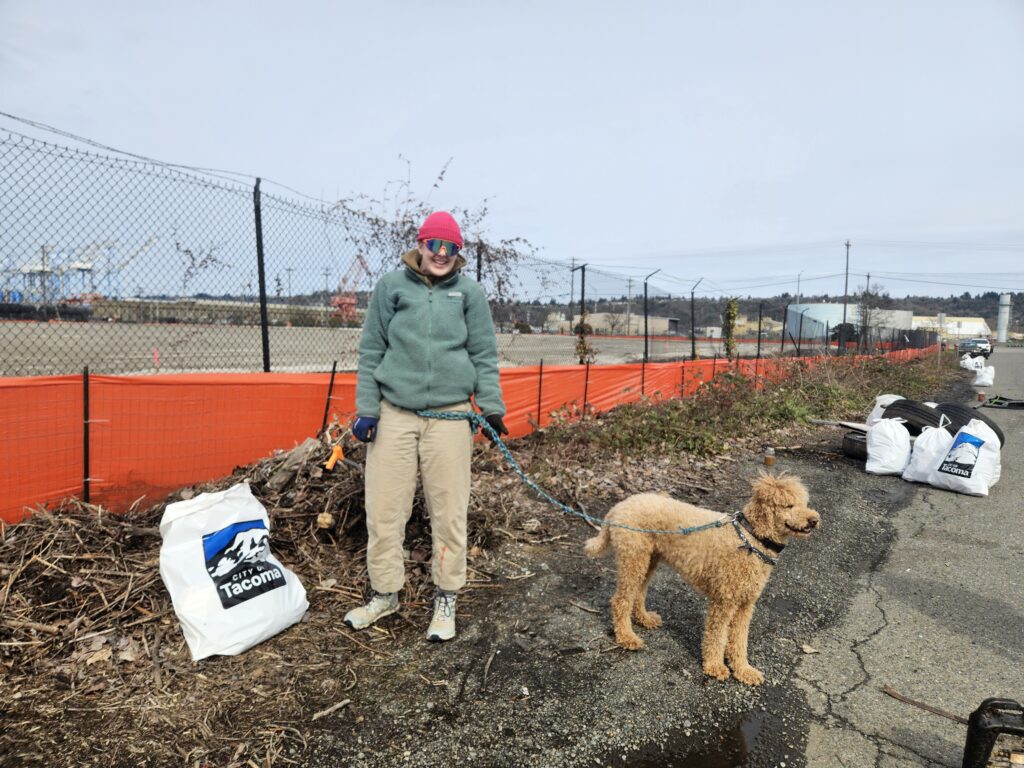
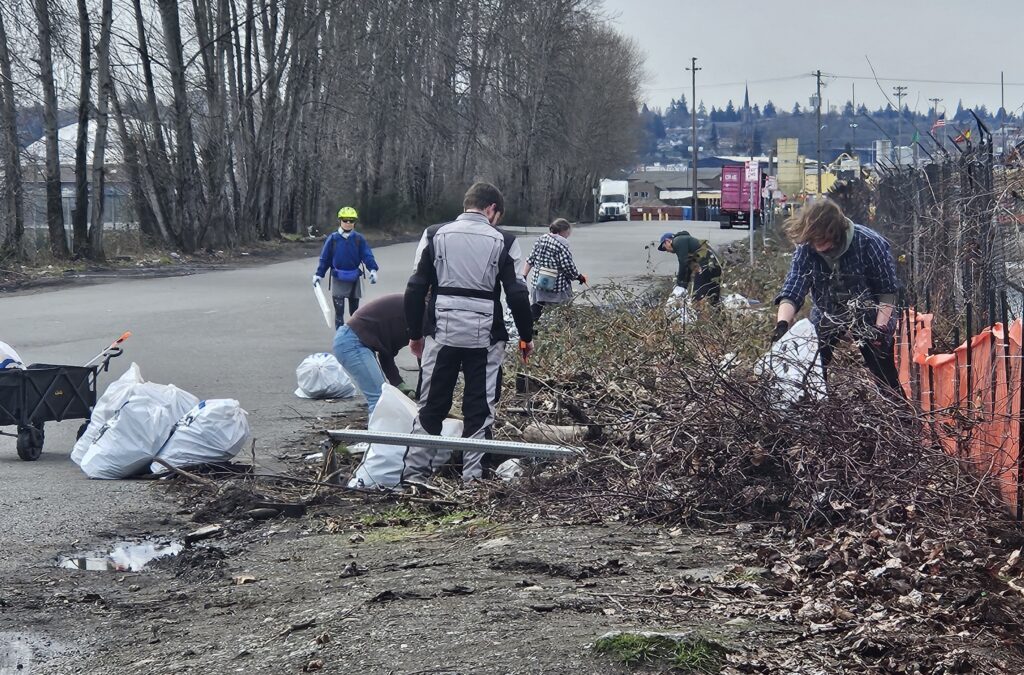
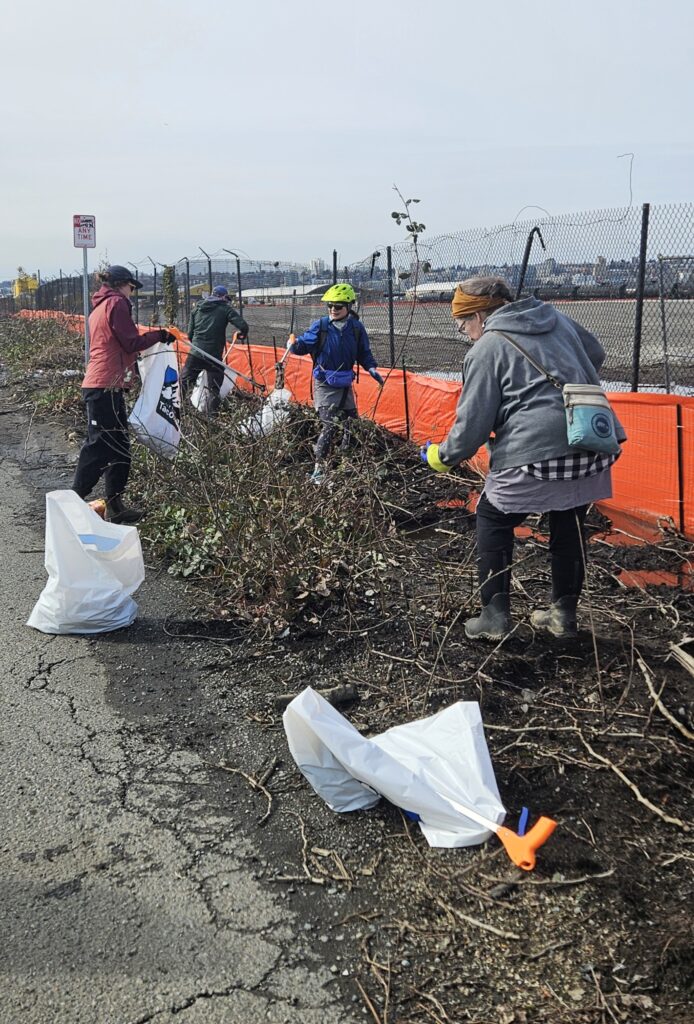
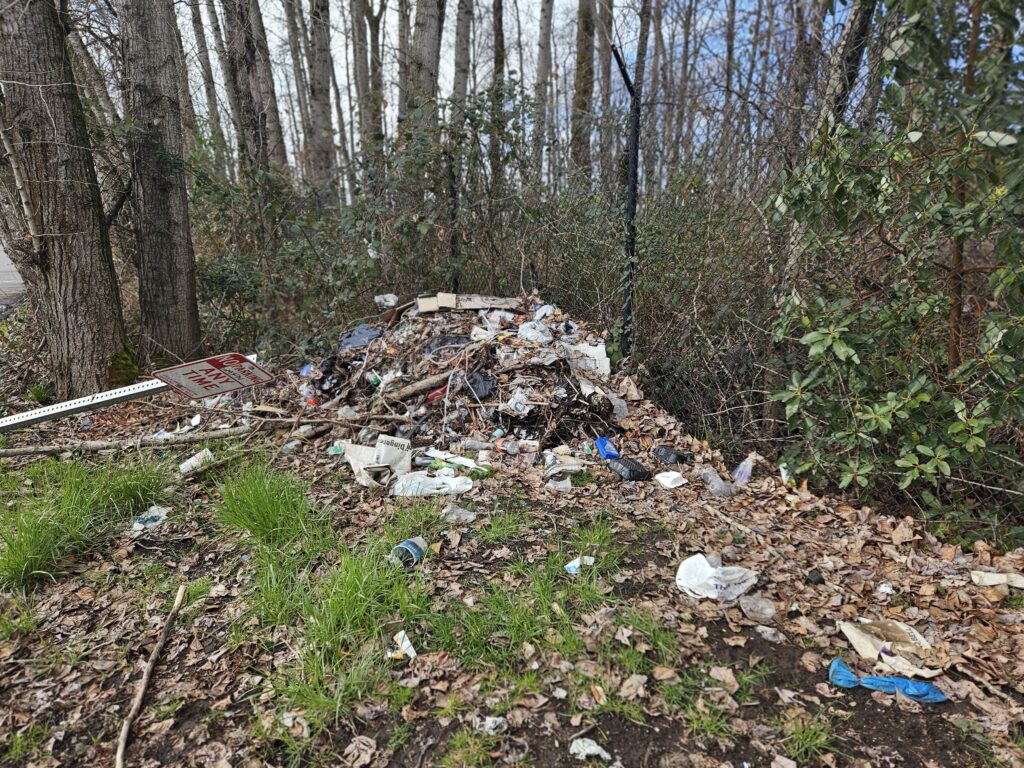
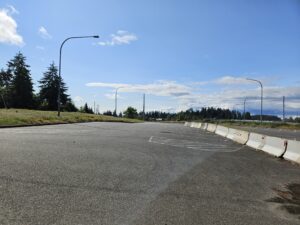
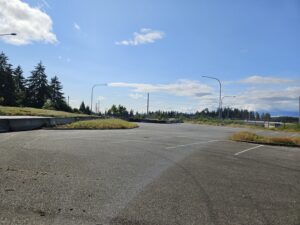
Our first clean up of 2026 we choose a street adjacent to qʷiqʷəlut (“little marsh”). There used to be a acres of cottonwood trees behind the fence, but the city permitted its destruction for yet another parking lot for empty shipping containers, despite extremely low tree canopy and greenspace in the area. There was so much trash dumped here that we had to do this same section of Maxwell Way again in April. We filled about 40 bags and piled up lots of large debris in just two hours!
2025 Clean Ups
This year, 350 Tacoma hosted a series of trash clean ups at different locations around the city. We partnered with a variety of organizations to involve as many community members as possible.
As we selected locations, we kept in mind which places have debris that is likely to make it into our waterways, which areas are typically underserved by services, and which communities have bad scores on the health and equity index maps.
Stewardship is a core value of 350 Tacoma. We must care for Mother Earth, care for our shared home, and maintain a deep connection with our environment through acts of service.
This series was made possible by a grant from the Tacoma Sustainability Small Grants Program.
We plan to continue clean ups in the spring through fall of 2026. Let us know if you want to nominate a location by emailing 350tacoma@gmail.com
Event Recaps
Road adjacent to qʷiqʷəlut ("little marsh")
Our first Clean Up Tacoma Event happened in March, near qʷiqʷəlut (“little marsh”) along the roadside, in the Port of Tacoma, cohosted by the Climate Catastrophe Ground Zero Coalition.
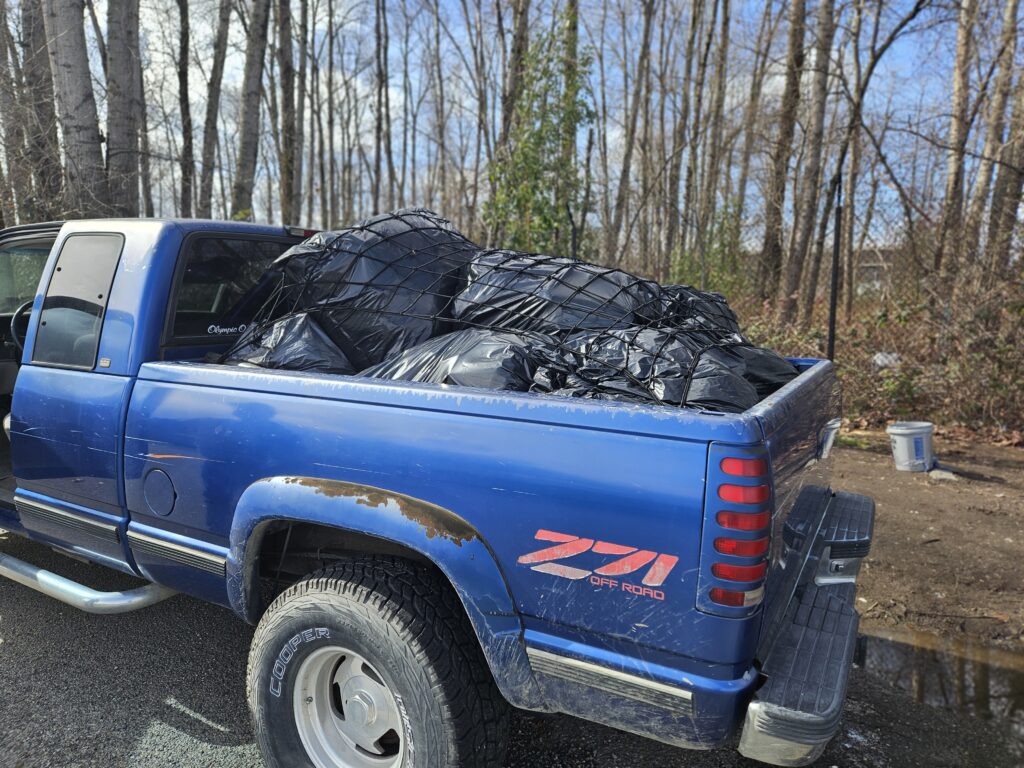
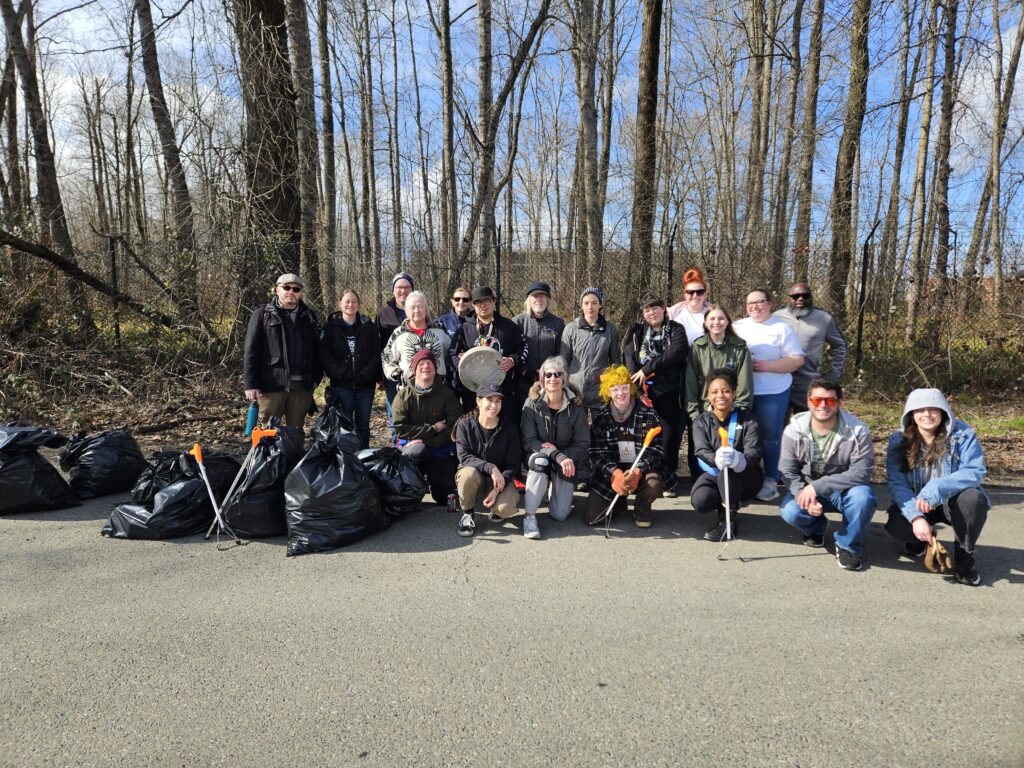
This location was in desperate need of care and with the help of almost 30 volunteers, we removed over 40 large black bags of trash and some furniture.
Ceremonial Grounds
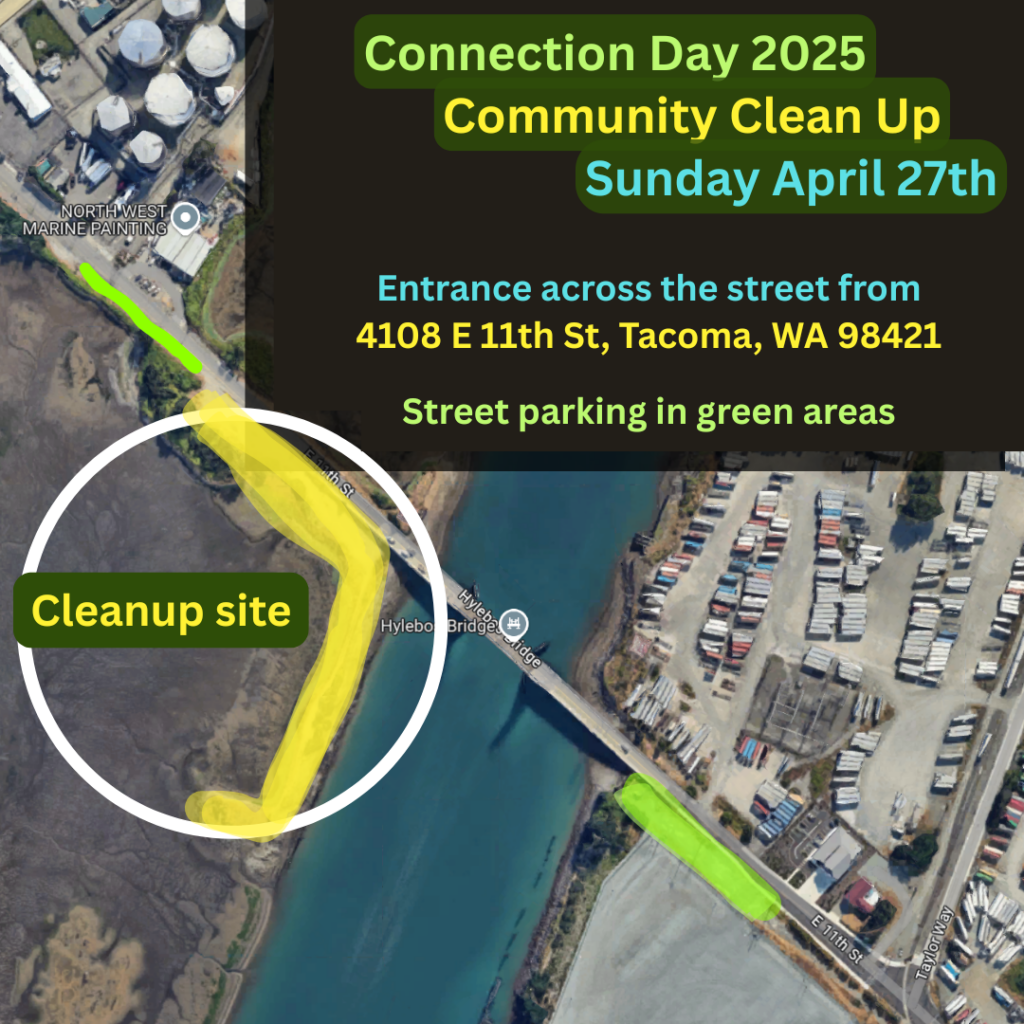
The Connection Day Clean Up took place at the Water Warriors Ceremonial Grounds, across the street from 4108 E 11th St, Tacoma. Hosted by 350 Tacoma, the Coast Salish Water Warriors, Native Daily Network, Climate Alliance of the South Sound, Chiapas Education Project & the Climate Catastrophe Ground Zero Coalition for a trash cleanup near the Hylebos Waterway. We were joined by about 20 volunteers.
This celebration draws inspiration from the Lakota saying “Mitakuye Oyasin”—“we are all related,” underlining the deep bond between each other and the Earth. Connection Day is a reflection of the Indigenous understanding that we are not separate from the Earth but a part of it. This will be the second annual Connection Day event.
We hosted a clean up at this same site last year for Connection Day. It was exciting to find that this special place had far less trash this year and previously. It was also noticeably more greenin places that were just dirt and sand last year including somenative medicine plants like plantain.
Scott Pierson Trail, South Tacoma
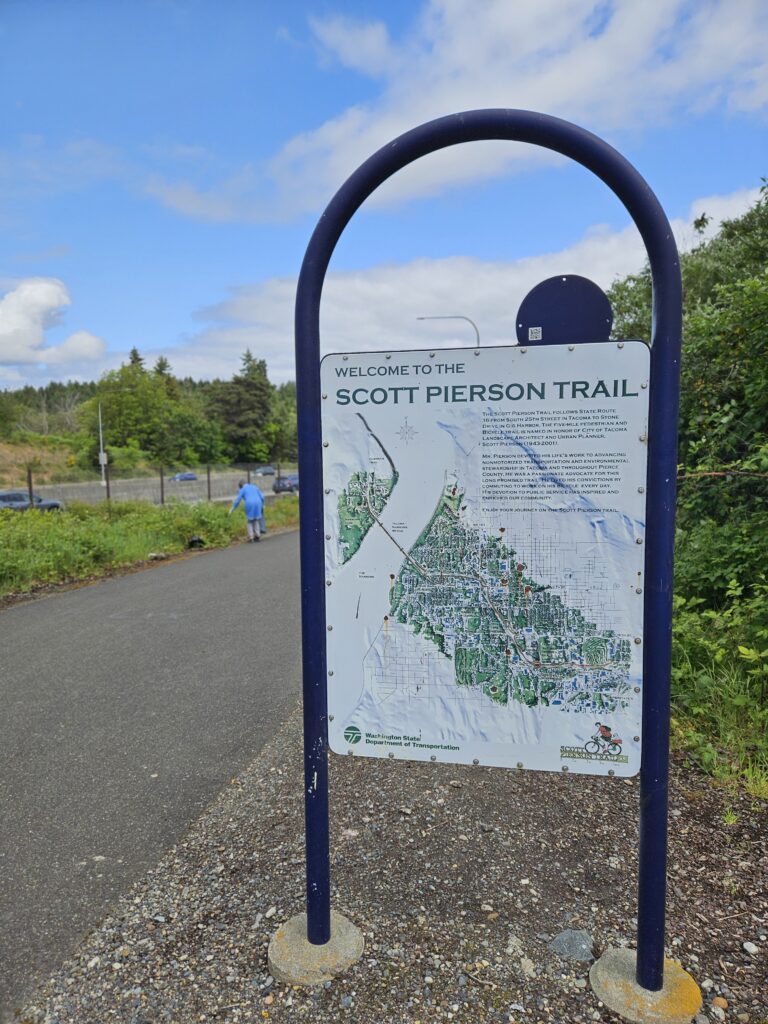
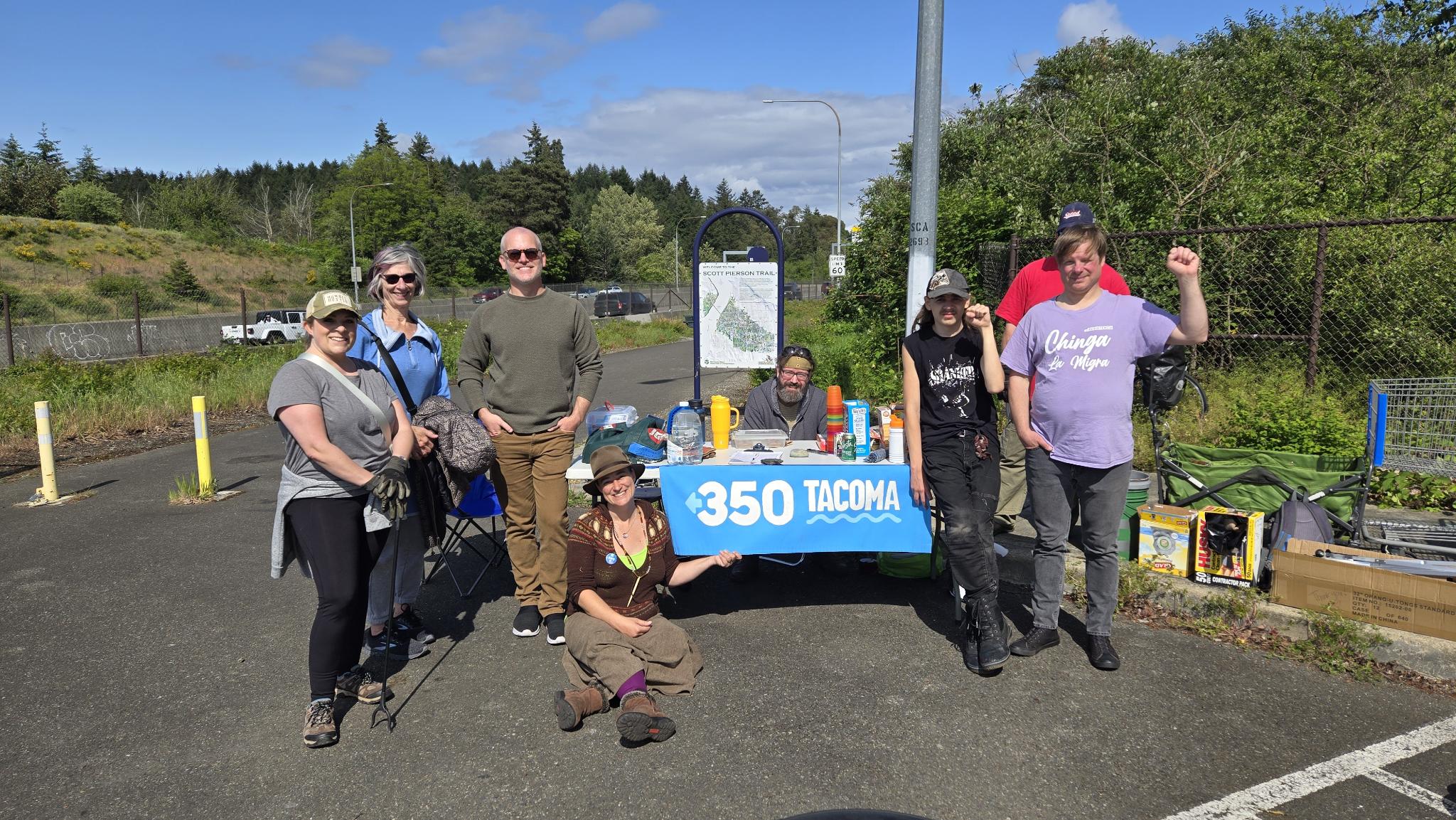
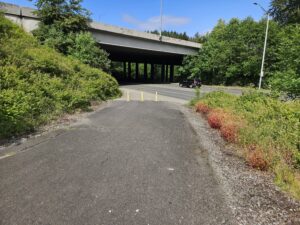
In May we partnered with the South Tacoma Neighborhood Council for a clean up along a section of the Scott Pierson Trail, and a Park & Ride, next to the Fircrest Gardens Apartments. We were joined by about 20 volunteers.
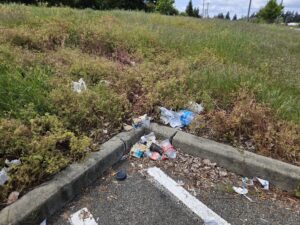
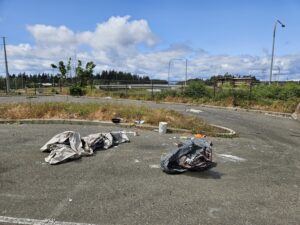
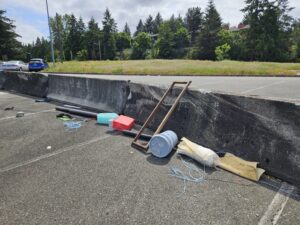
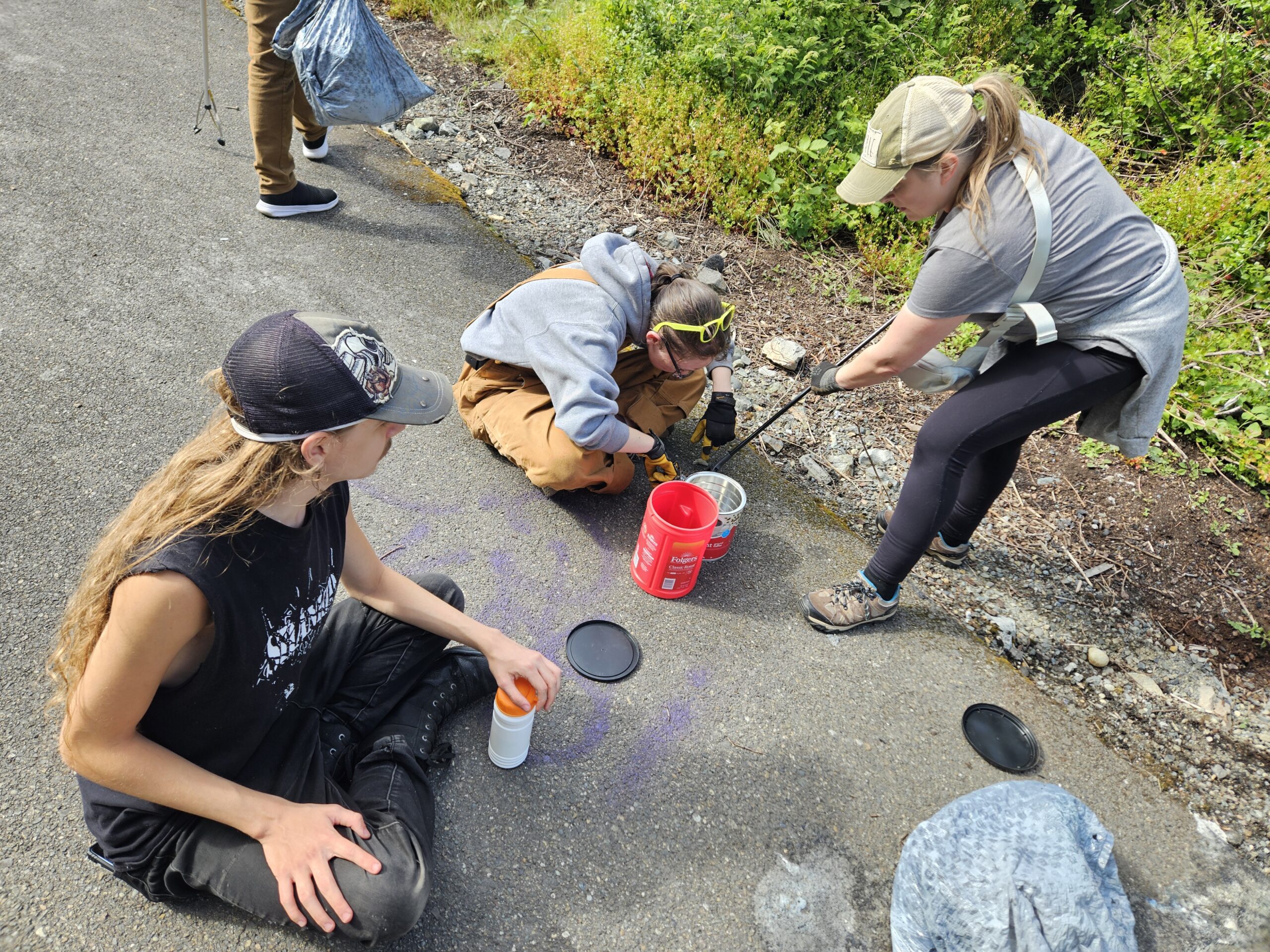
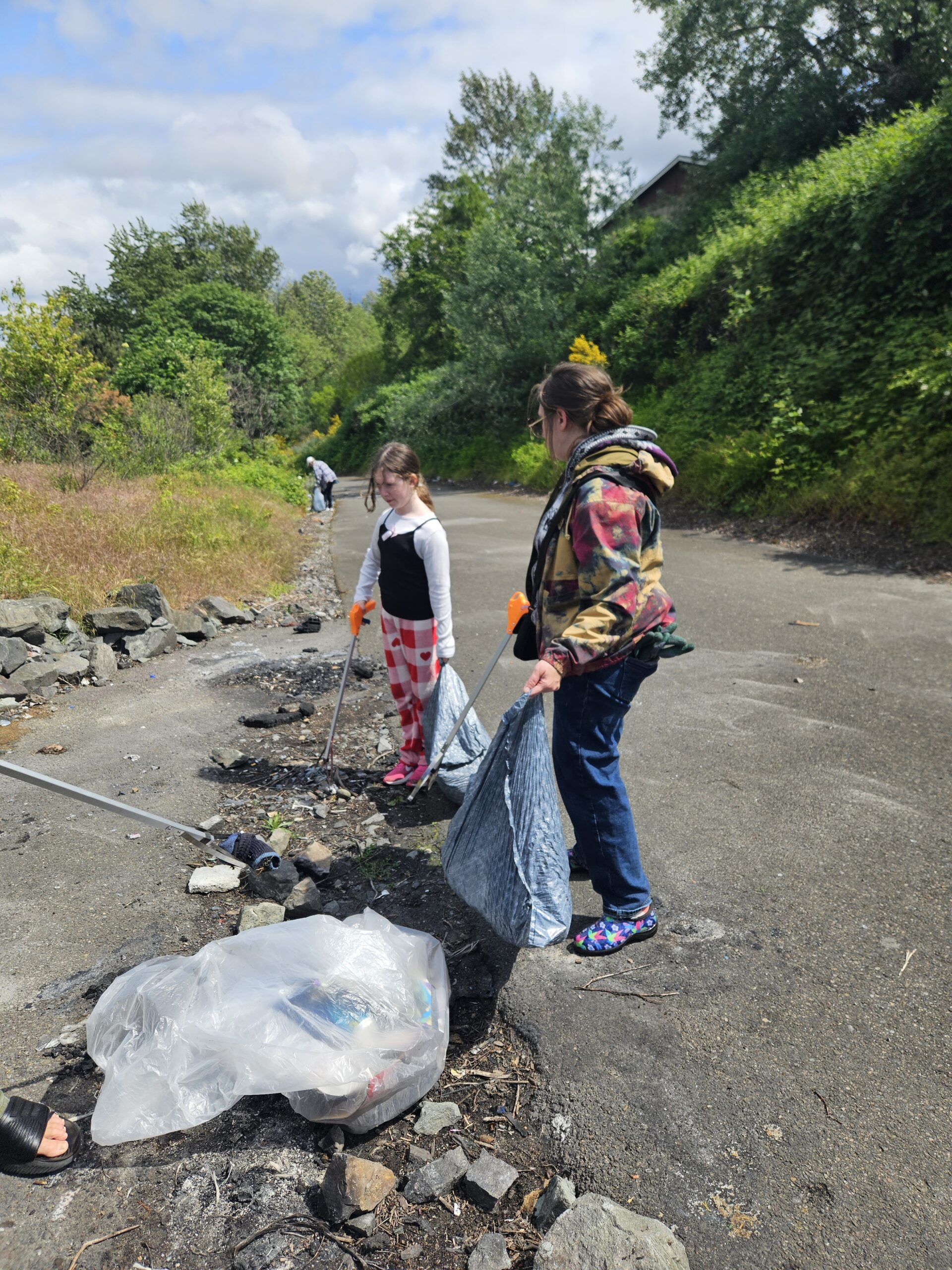
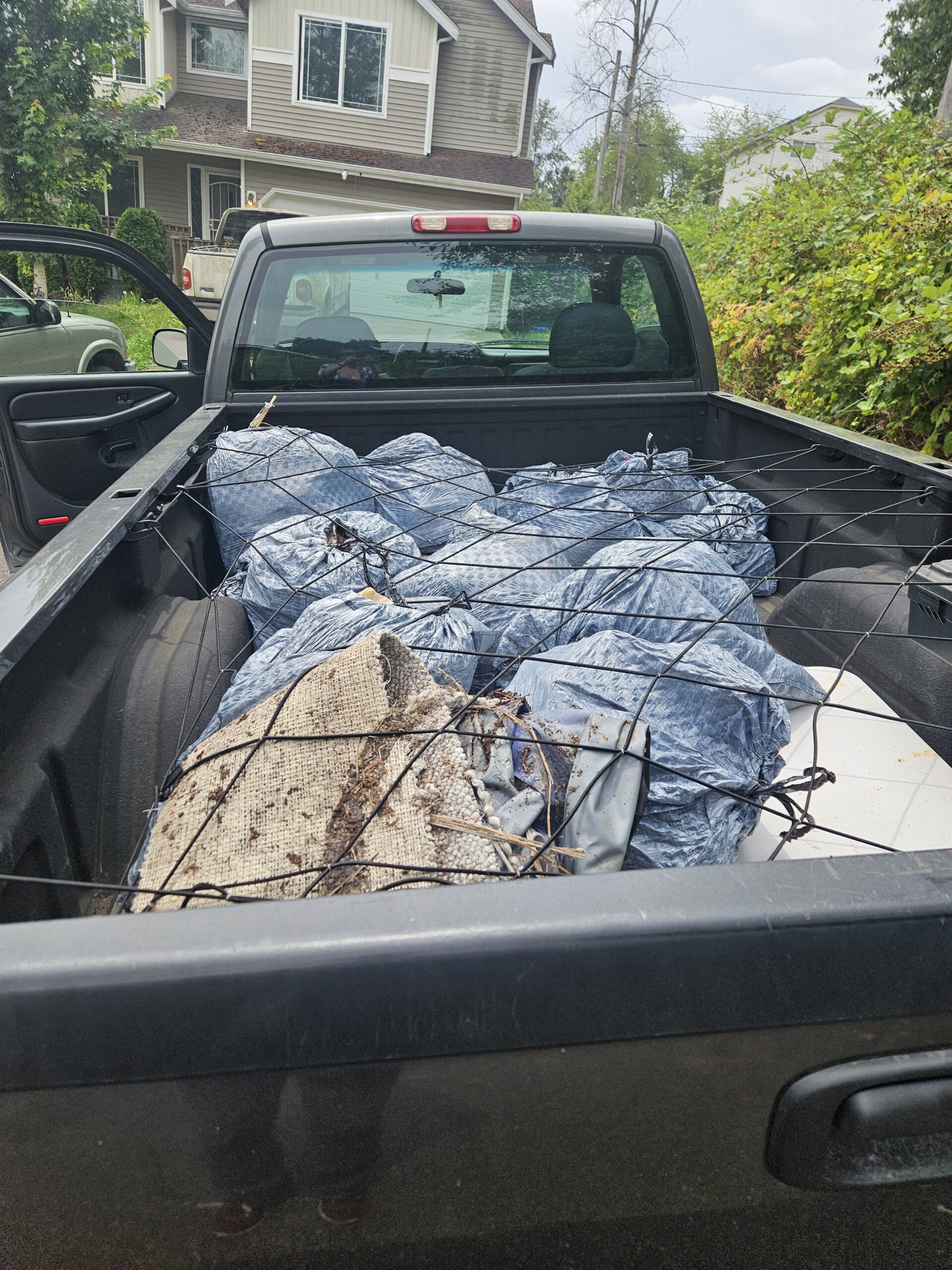
This location was in need of a cleanup! We removed a heaping truckload of discarded clothing, food packaging, broken glass, household items, burnt wood and other trash. In the grassy banks along the trail there were signs of previous camping. With the crisis of a lack of affordable housing, lack of services, and rising cost of living, more and more of our community members are forced to shelter wherever they can.
Neighborhood Near Eastside Community Center
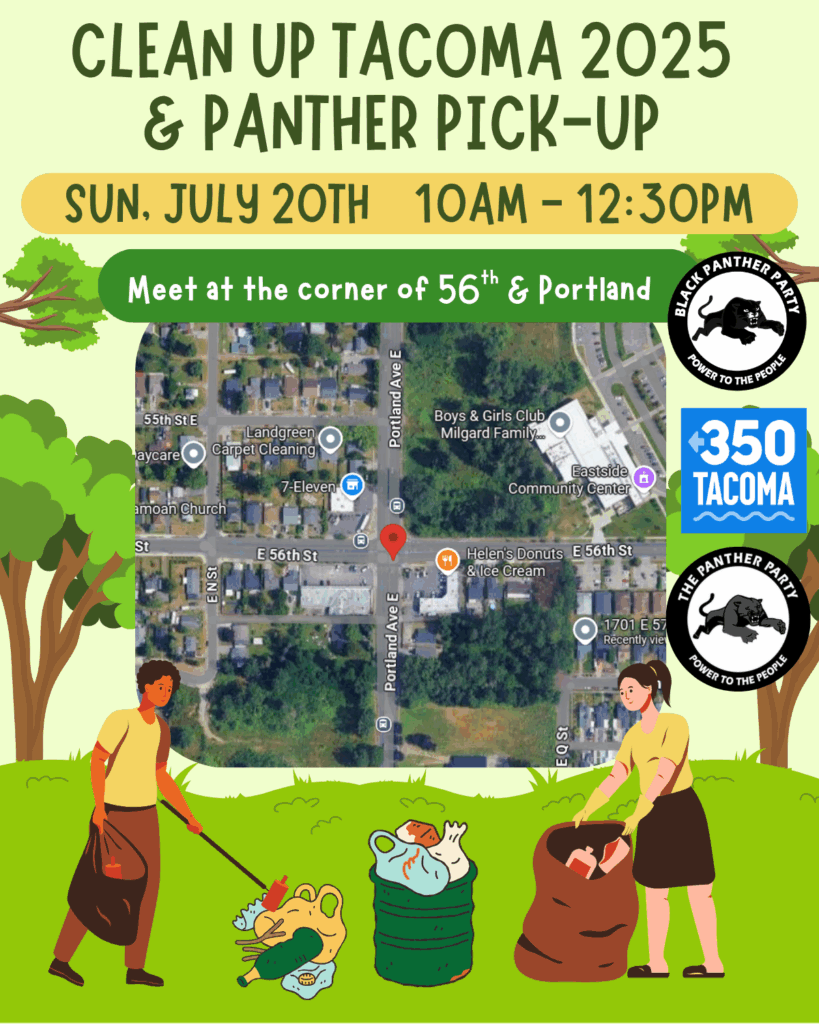
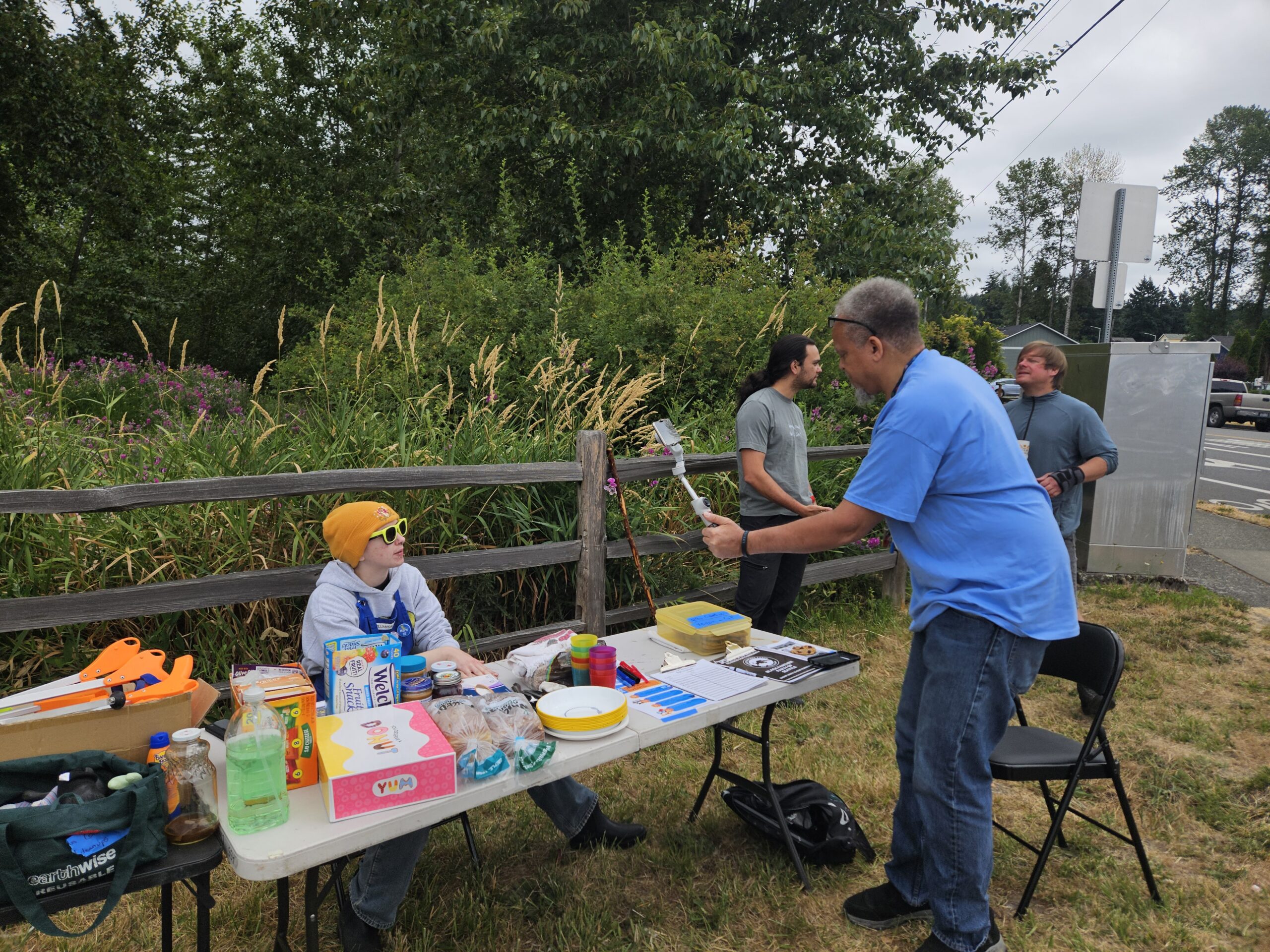
Our July clean up was co-hosted by The Black Panther Party and The Panther Party, as a restart of their “Panther Pick-Up” program.
We cleaned up several streets in the neighborhood along houses and apartments and a bus stop. Much of the trash was food wrappers, cans/bottles, broken glass and other small debris. Without public garbage cans along these streets, and many people making a walk to the mini marts nearby it’s not surprising this is the types of trash we found. Some trash also appeared to have blown out of overfull garbage bins outside of the apartments.
Swan Creek Park Trailhead
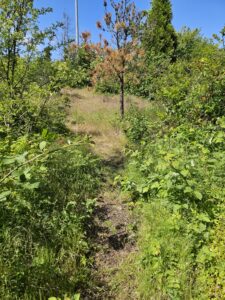
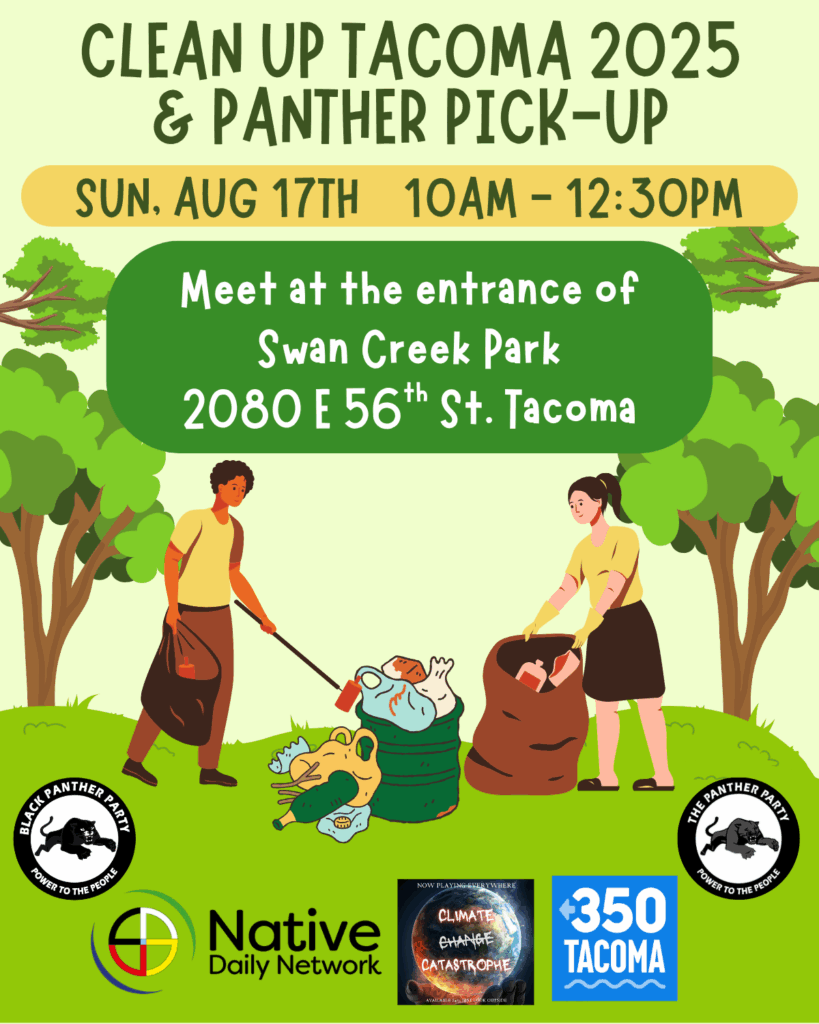
In August we gathered at the Swan Creek Park entrance at 2080 E 56th St Tacoma to focus on the entrances of several bike/walking trails. This side of the park is near many apartment complexes, a school, and the Boys and Girls Club. Most of trash we found was near the start of trails with the litter disappearing farther in, with the exception of a few nooks/ravines where people had clearly camped out. The majority of the trash was from food and drinks, and a lot of broken glass.
This clean up was hosted by 350 Tacoma, The Black Panther Party, The Panther Party, Native Daily Network & the Climate Catastrophe Ground Zero Coalition.
All Power To The People!
Swan Creek Park... round two
In September we revisited the Swan Creek Trail on 56th St because the quantity of trash and numerous sections to work on proved too much for one clean up! We found the same pattern of most trash being related to food and beverages, or broken glass. In the underbrush along the trail behind an apartment building we found large concentrations filling up five big bags. We also found five tires and other car parts.
It’s worth noting that there are no garbage cans at any of the entrances to the park or along sidewalks between the corner store on Portland Ave and this park. So it’s not surprising that we find food and beverage litter. These are the types of basic resources that some neighborhoods get and others do not, and the impacts ripple outward.